
European Medieval Helmets
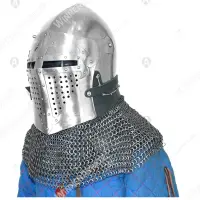
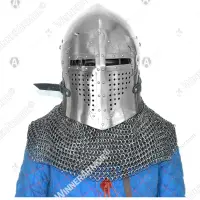
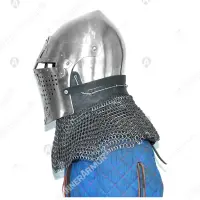
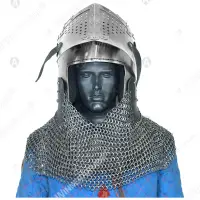
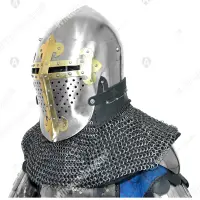

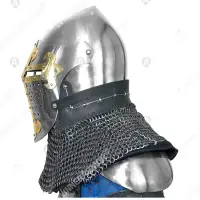
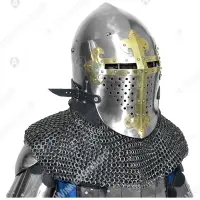
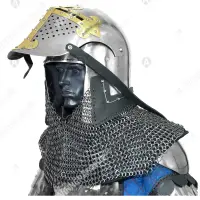
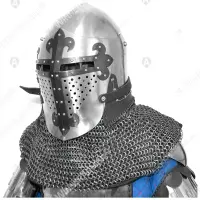
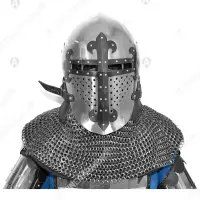
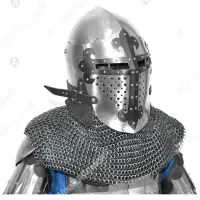
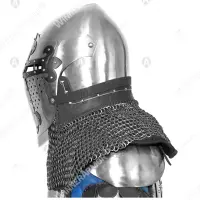
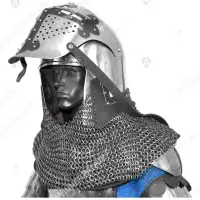
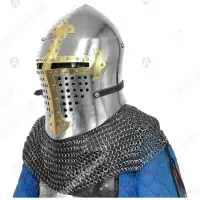

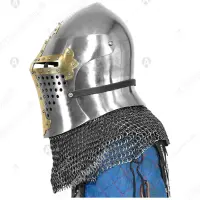
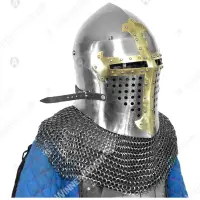

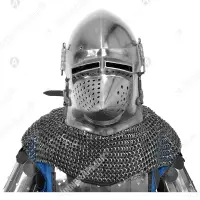
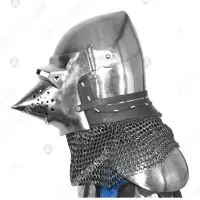
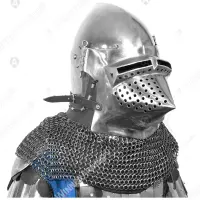
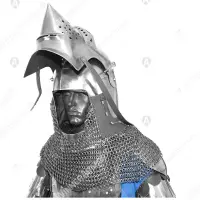
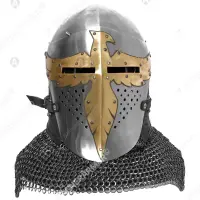
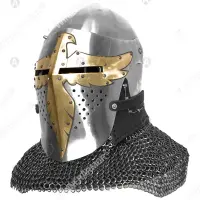
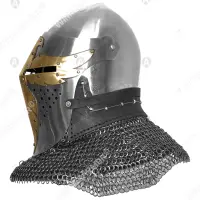
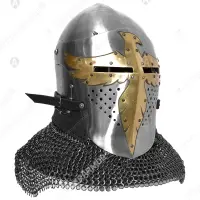
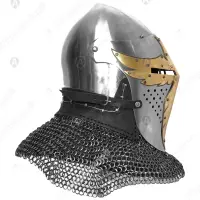
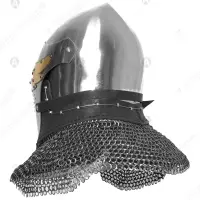
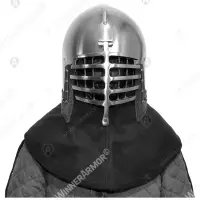
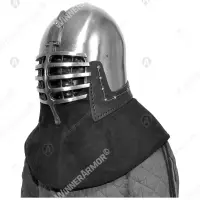
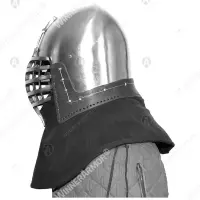
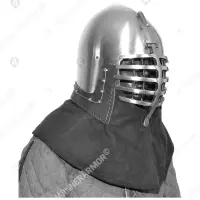
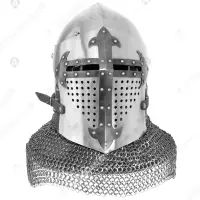
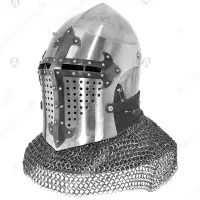
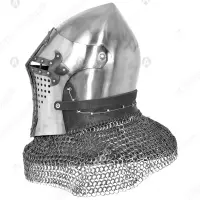
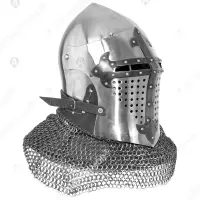
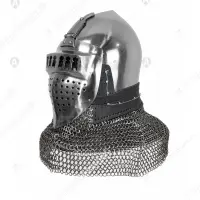
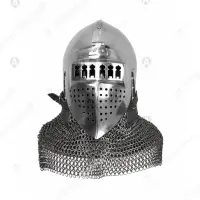
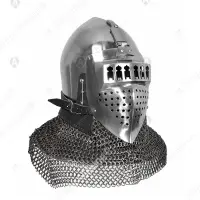
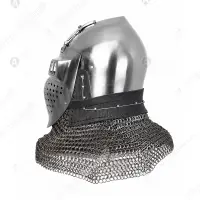
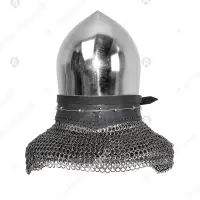

A European helmet for full-contact historical combat is picked for protection, mobility, and day-to-day durability, not for display. Items in this category follow documented historical prototypes: dome geometry, visor lines, and fastening logic are based on European XIV–XV c. analogs, adapted for regular training use.
Protection is a system, not a single number. These helmets focus on head coverage for crown, temples, occiput, and face, plus stable work of the load-bearing points. Visor and hinge areas are built with visor loads in mind; seams and edges are finished to reduce snagging and to limit strap damage under contact. Pair the shell with a proper liner and neck protection for controlled energy management.
Fit comes from geometry and correct sizing. Internal volume is designed for padding, so you can tune fit with replaceable layers while keeping vision and breathing control. Weight balance and suspension points matter in clinch work: the helmet should sit stable and allow controlled head rotation, supporting mobility rather than fighting it.
For buhurt and related formats, serviceability is part of safety. Hardware such as straps, buckles, rivets, and suspension elements is intended for field maintenance, so small fixes are realistic between rounds. The designs align with common tournament inspection checkpoints across full-contact rulesets, but final compliance depends on the event’s current regulations and your full protective setup.