
Milanese plate legs for buhurt and full contact
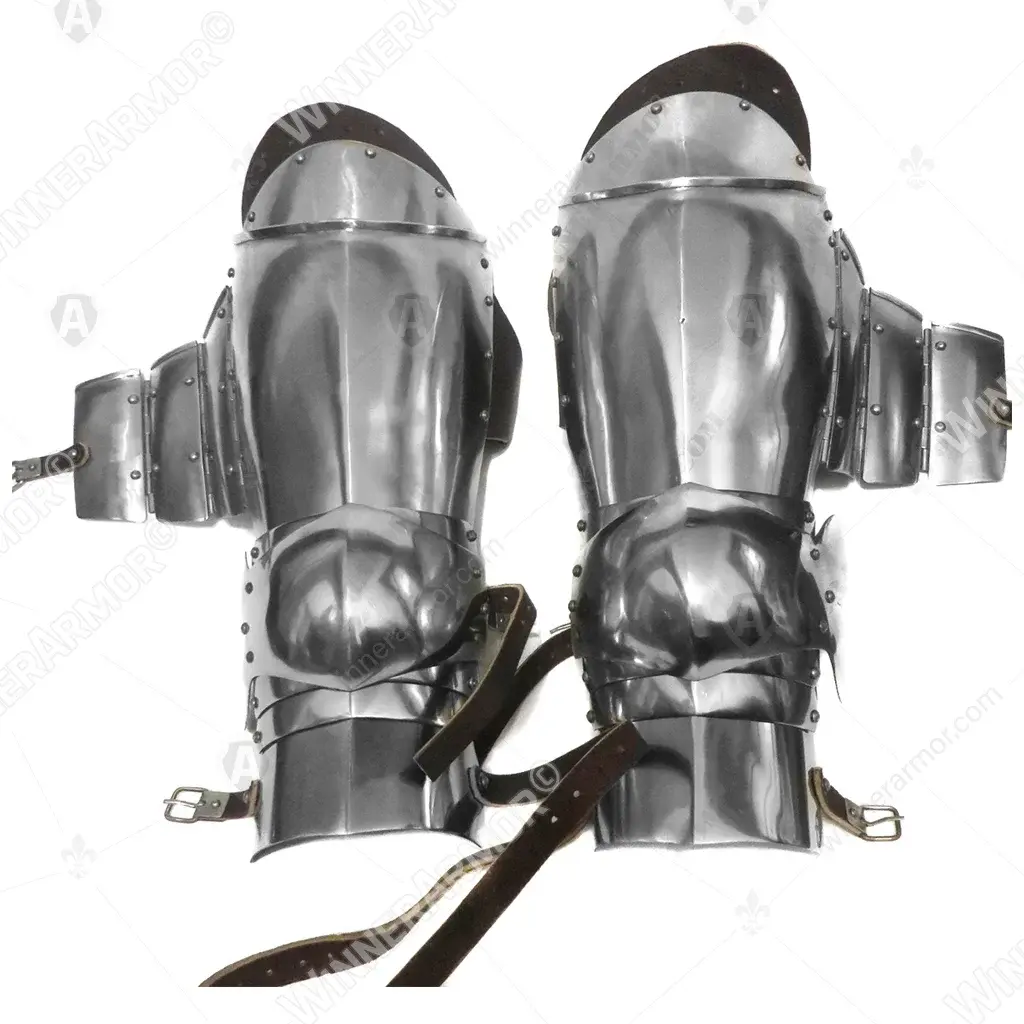
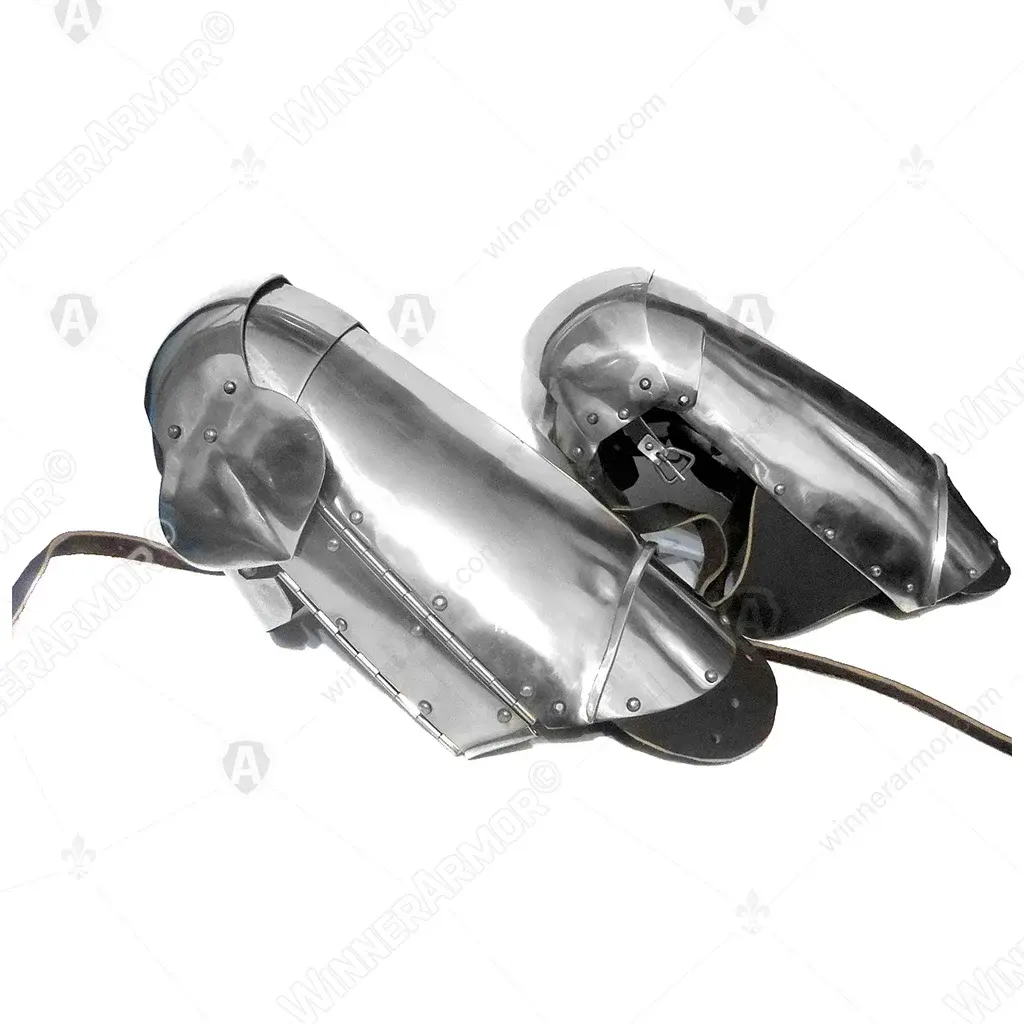


Milanese plate legs are a practical leg armor configuration for buhurt and full contact, based on 15th-century Milanese analogs and historical sources (museum references, iconography, finds). The style stays consistent across much of the 15th century, making it easier to pair with different torso and arm setups.
The layout focuses on key impact zones: thigh coverage, knee cops, and greaves. The geometry is tuned to take direct and glancing blows while keeping functional knee range for footwork and clinch movement.
- Protection: overlapping segments help reduce exposure at transitions under heavy contact.
- Mobility: knee shaping and articulation aim to avoid binding during deep bends.
- Fit: sizing and curvature are designed around typical anatomy and proportions for predictable seating over an arming layer.
- Durability: built for repeated training cycles; wearable parts (straps, laces, rivets) are service items.
- Repairability: dents and hardware can be addressed locally without complex disassembly.
In tournament practice, plate legs of this type are commonly used across inspection-based formats (including HMB, IMCF, and others). Passing checks depends on configuration, strapping setup, and the specific ruleset—verify your league requirements before an event.
Care notes: keep the set dry, monitor strap tension and suspension points, smooth any burrs after impacts, and replace worn straps/laces. This keeps protection and stability consistent in fights.