
Museum-based helmet with aventail for full contact combat
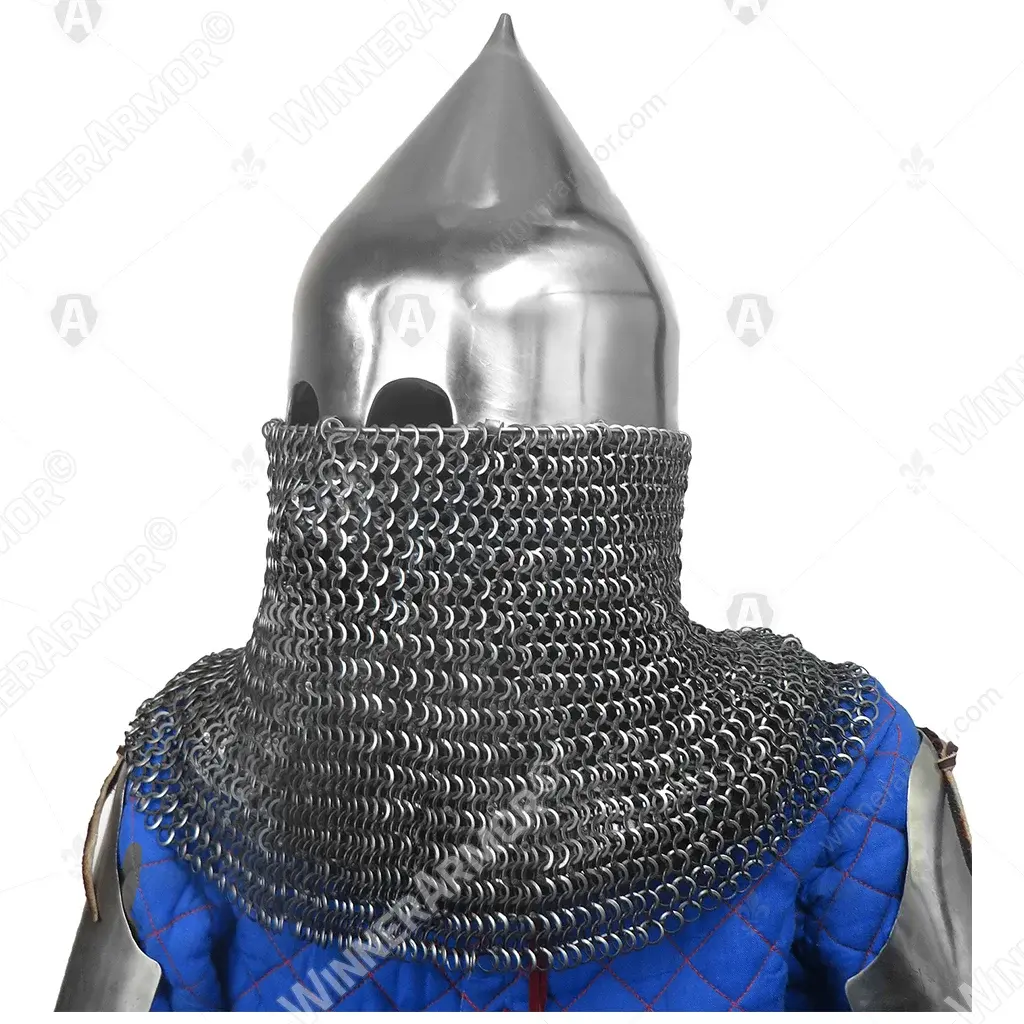
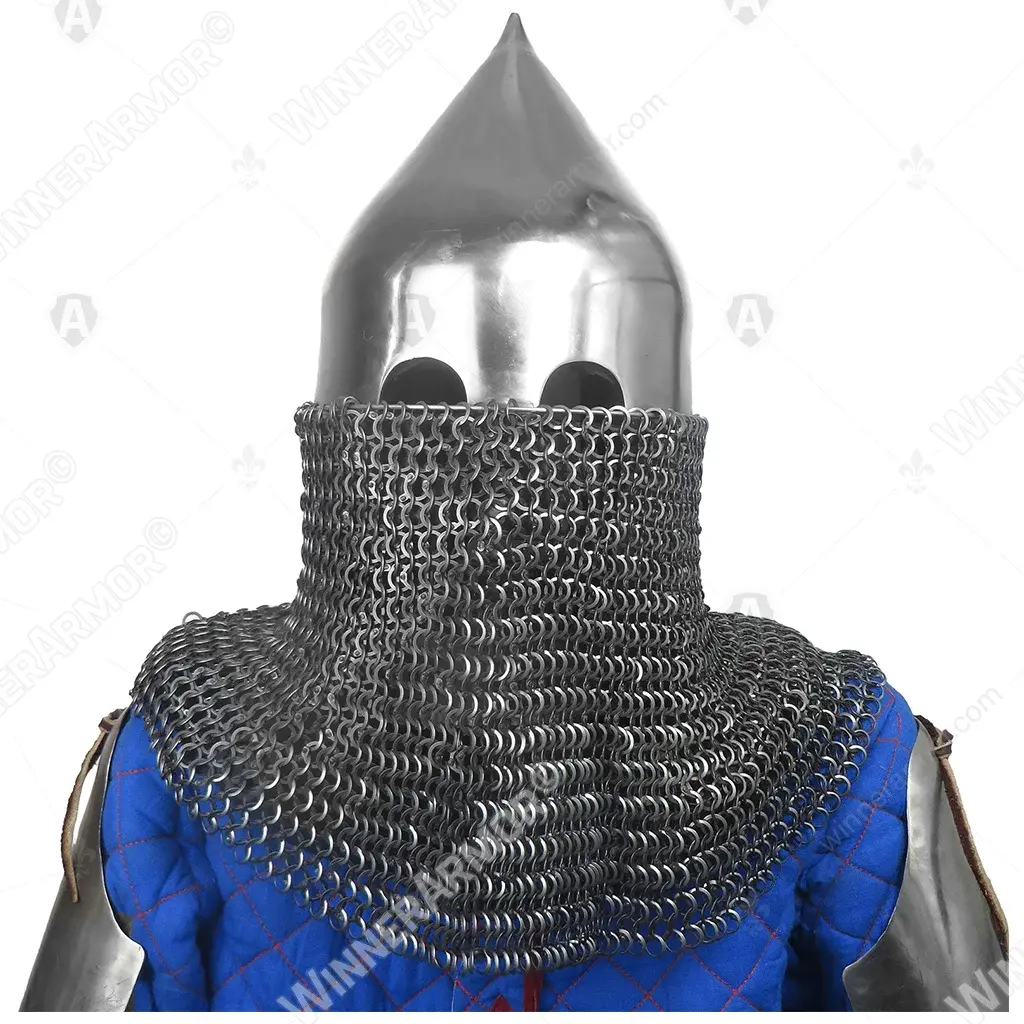
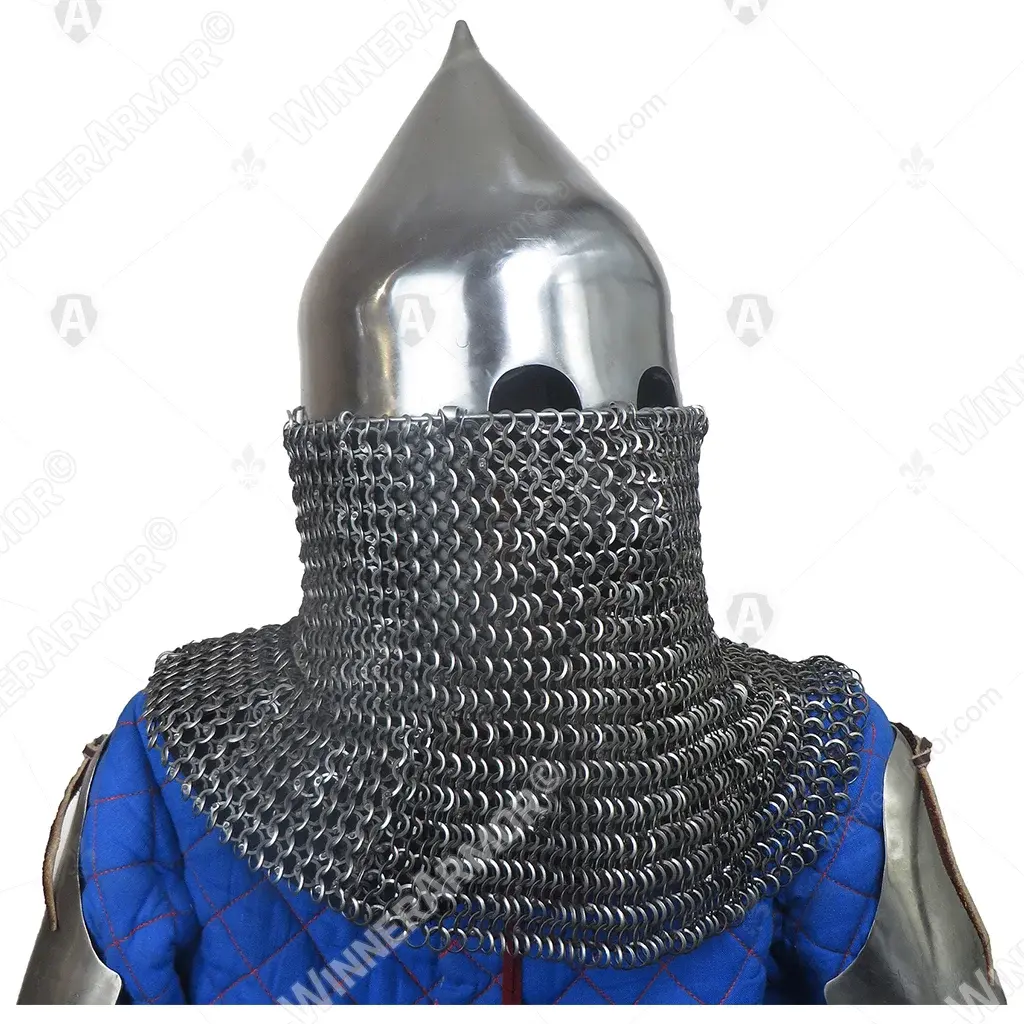
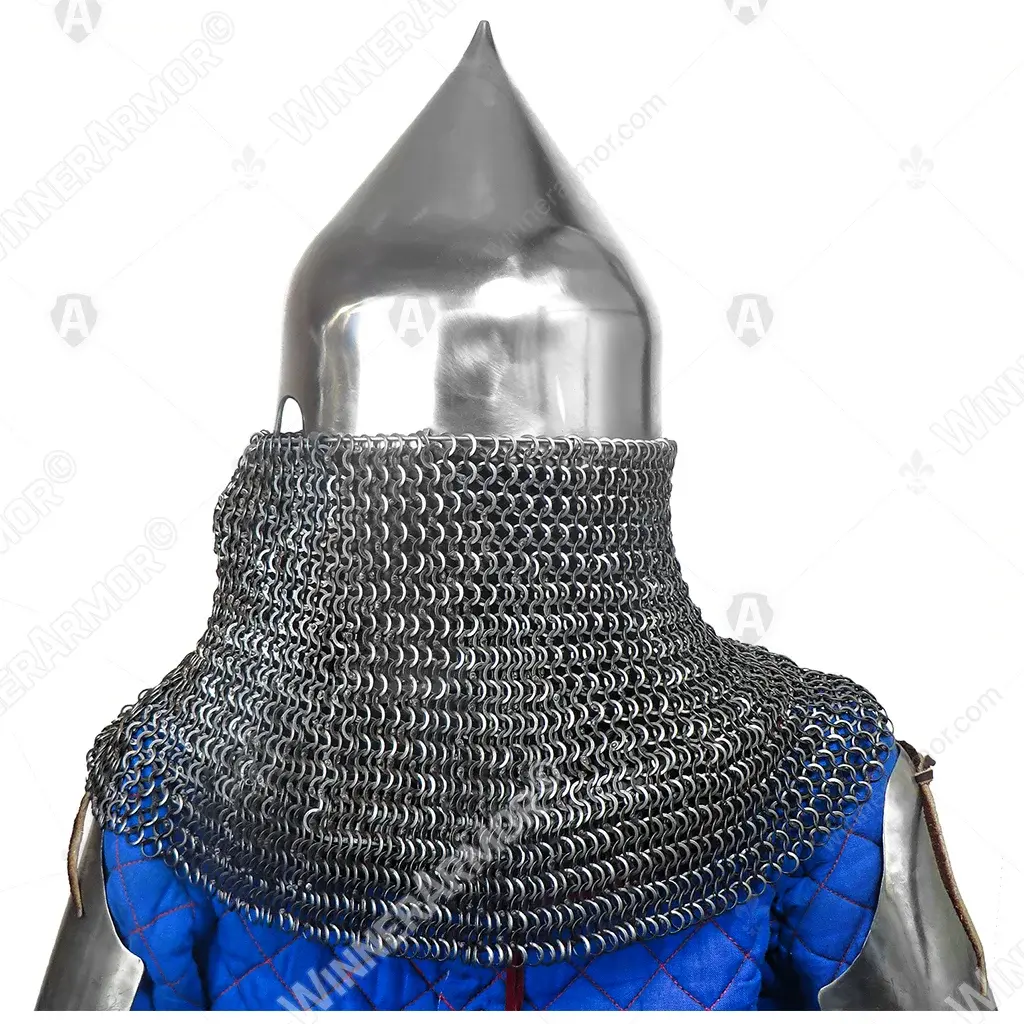
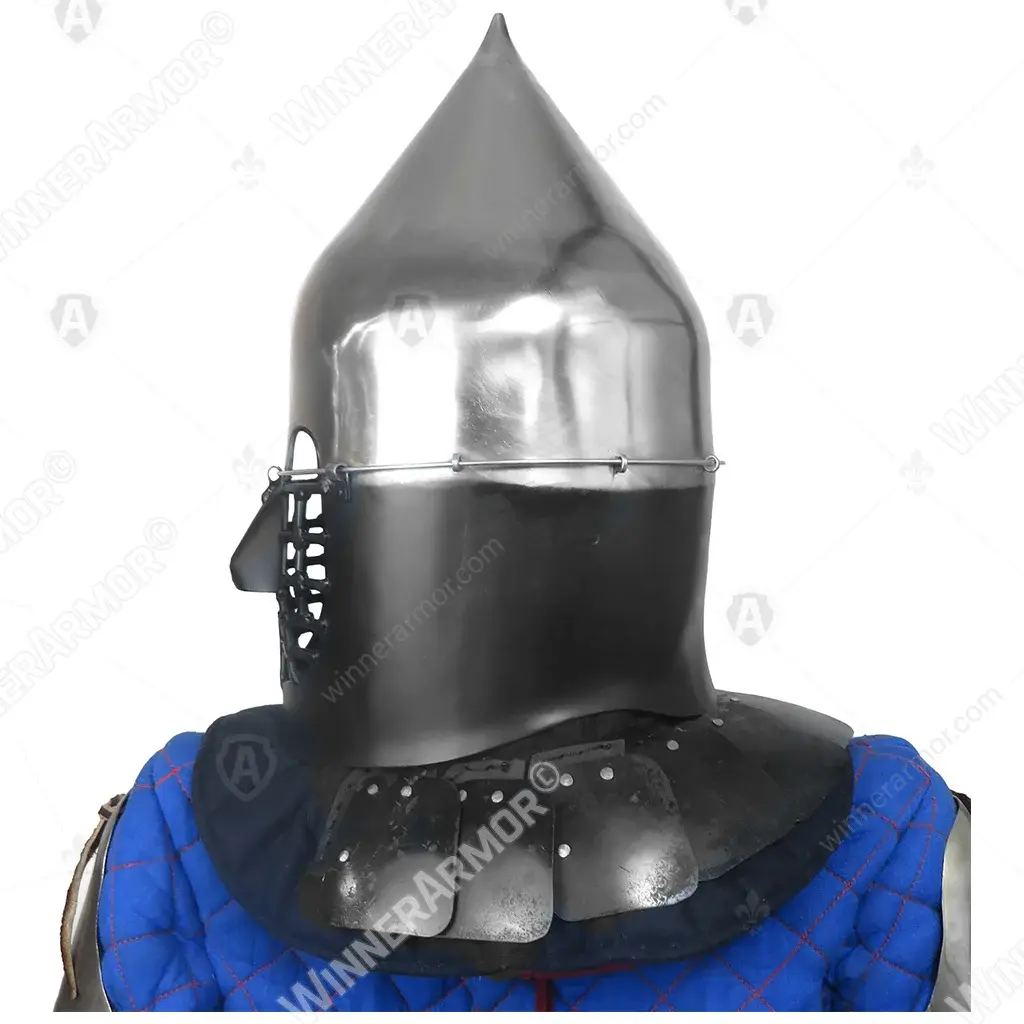
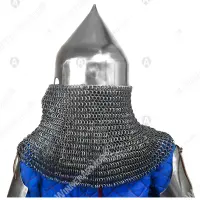
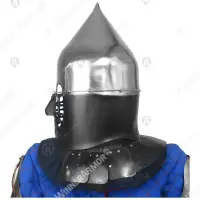


Buhurt helmet built from historical sources and museum analogs: a late 14th-century prototype from the Artillery Museum in St. Petersburg. The design targets full contact use with concealed face protection and neck coverage, helping manage impact and reduce snag points during clinch fighting.
Included equipment for practical field use:
- mail aventail to cover the neck line and lower head, integrating well with collar/neck protection;
- padded liner with concealed reinforcing plates to stabilize the fit and spread load from hits;
- strap system for secure retention under pulls, drops, and collisions.
Mobility and functional visibility come from the helmet’s geometry: fewer exposed edges that catch blades or hooks, while keeping the helmet workable for active head movement and body work.
Fit is achieved through sizing, seating geometry, strap adjustment, and liner thickness options. This supports common head shapes without implying automatic bespoke measuring for every customer.
Serviceability: the aventail and attachment hardware can be maintained or replaced, and the liner can be serviced as it wears — relevant for frequent training and event cycles.
Event inspection note: the construction and protective set are intended to meet typical safety checks seen in major formats (e.g., IMCF/ACL/HMB and similar). Final approval always depends on the specific event rules, chosen configuration, and correct fit.