
Topfhelm (Great Helm) for armored full-contact fighting
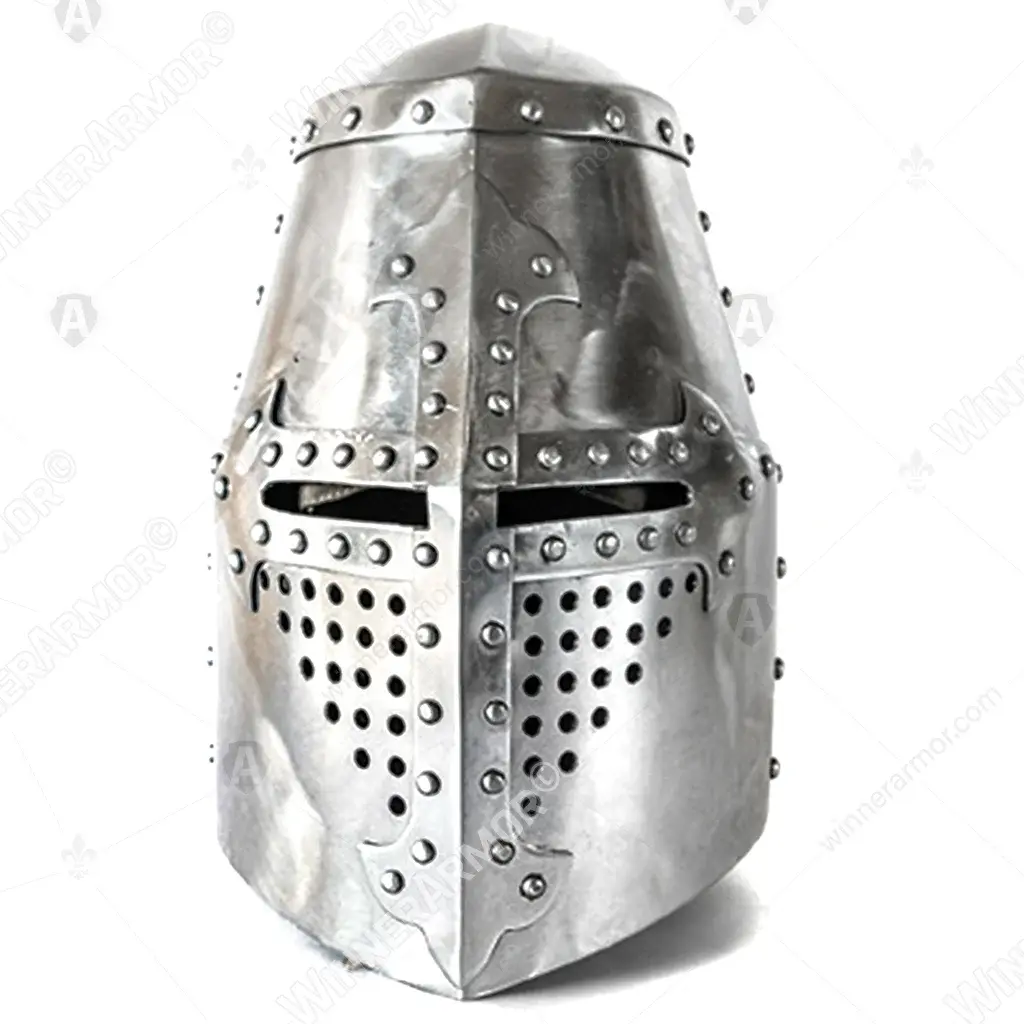
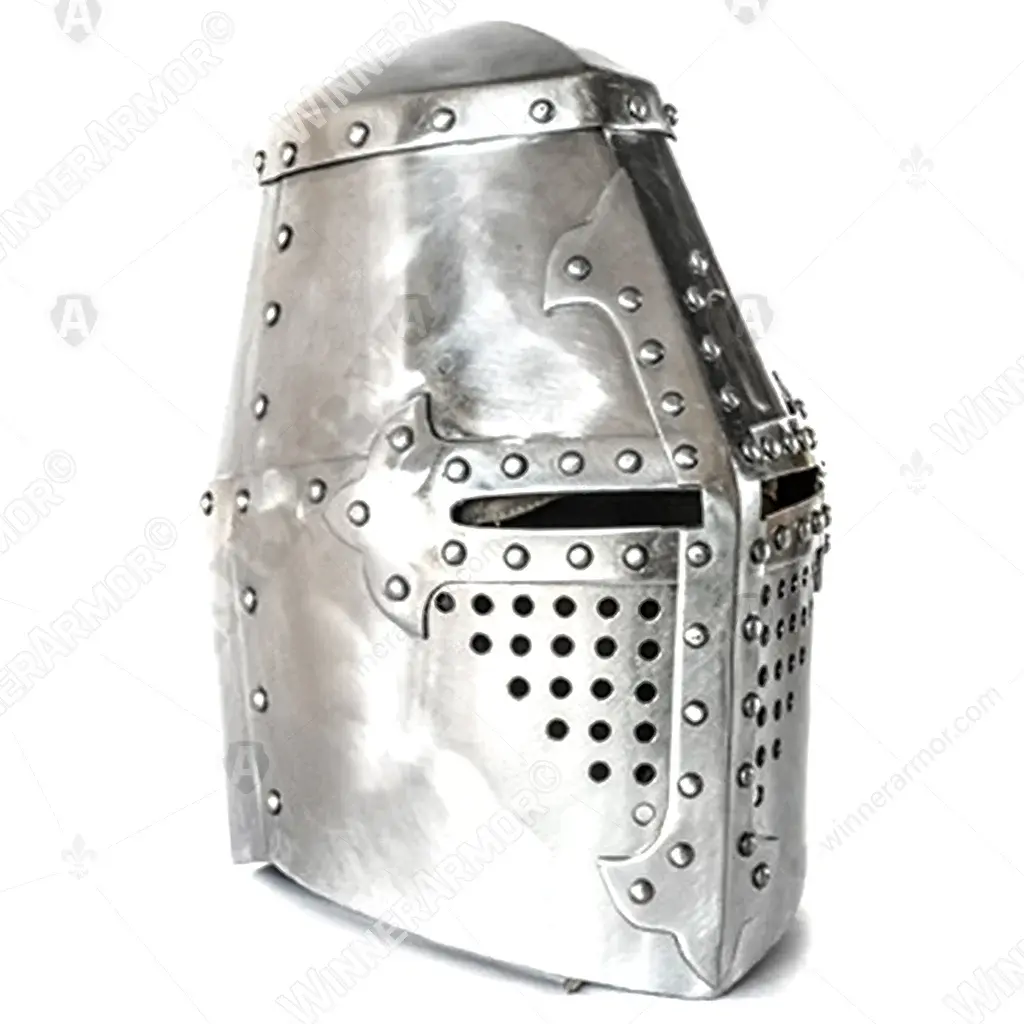
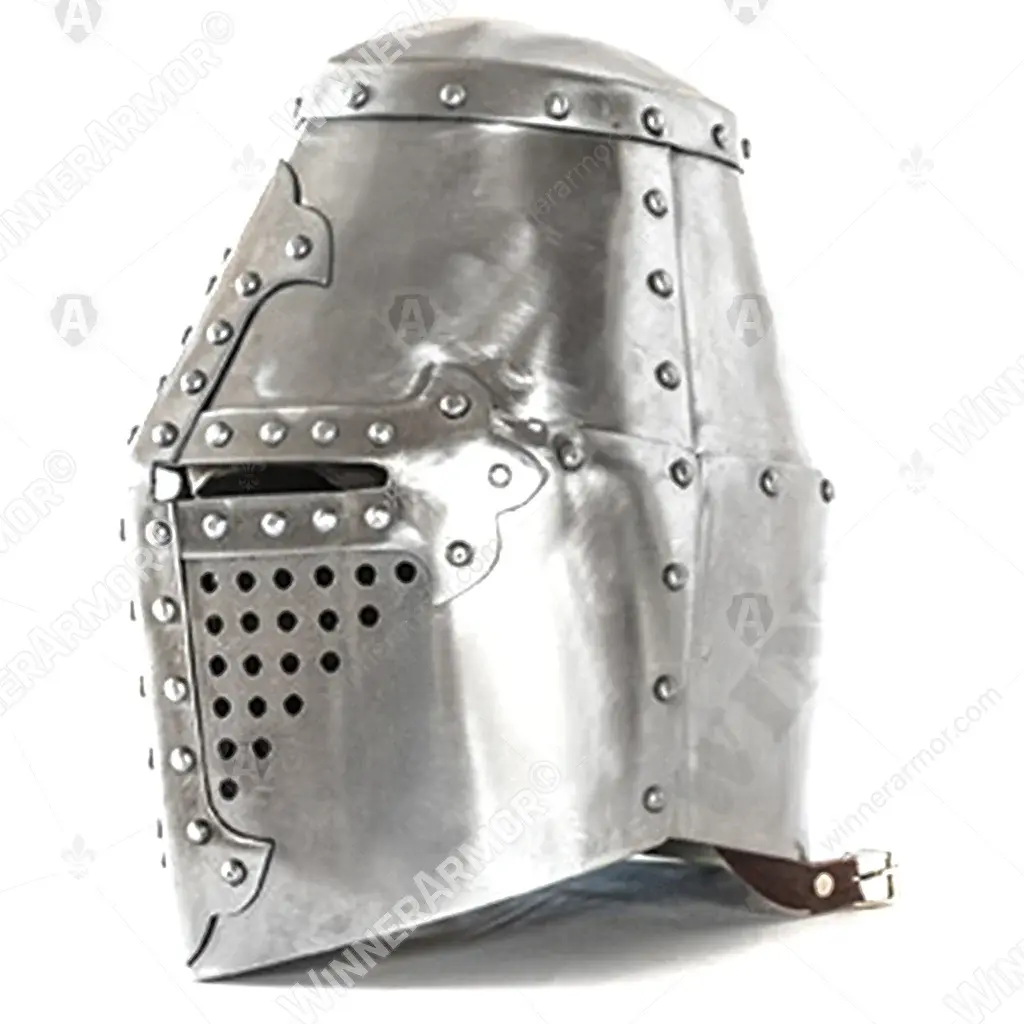
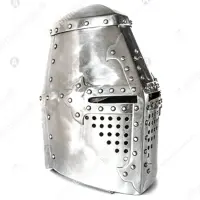
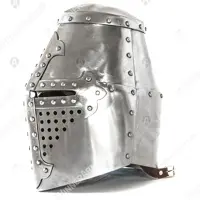


Topfhelm (Great Helm) is a European enclosed cavalry helmet made with reference to historical sources and museum-type analogs from the late 12th–13th centuries. The shape is practical for armored full-contact fighting: full coverage reduces exposure to direct and glancing hits, while the lower edge extends toward the neck area to add protection in close-range exchanges.
The shell is formed by pulling, which supports structural stiffness and improves durability under repeated impacts. Fit is designed to work with internal soft protection: the helmet is supplied with soft padding and retention straps. Geometry follows common head proportions to keep the helmet stable during movement and clinch pressure when the correct size and internal setup are used.
Closed helmets have inherent trade-offs: vision and ventilation are limited by design, so select the right internal volume and tune the straps and padding. For tournament checks, follow the rules of your chosen format (for example, HMB and other leagues): compliance depends on the selected configuration (thickness options, padding, straps) and the helmet condition at inspection.
Serviceability: straps and padding are consumable parts and can be replaced; most fit corrections are handled through suspension and padding adjustments. After fights—dry thoroughly, inspect fasteners, and keep a regular anti-corrosion routine.