
14th-century European bascinet with split visor
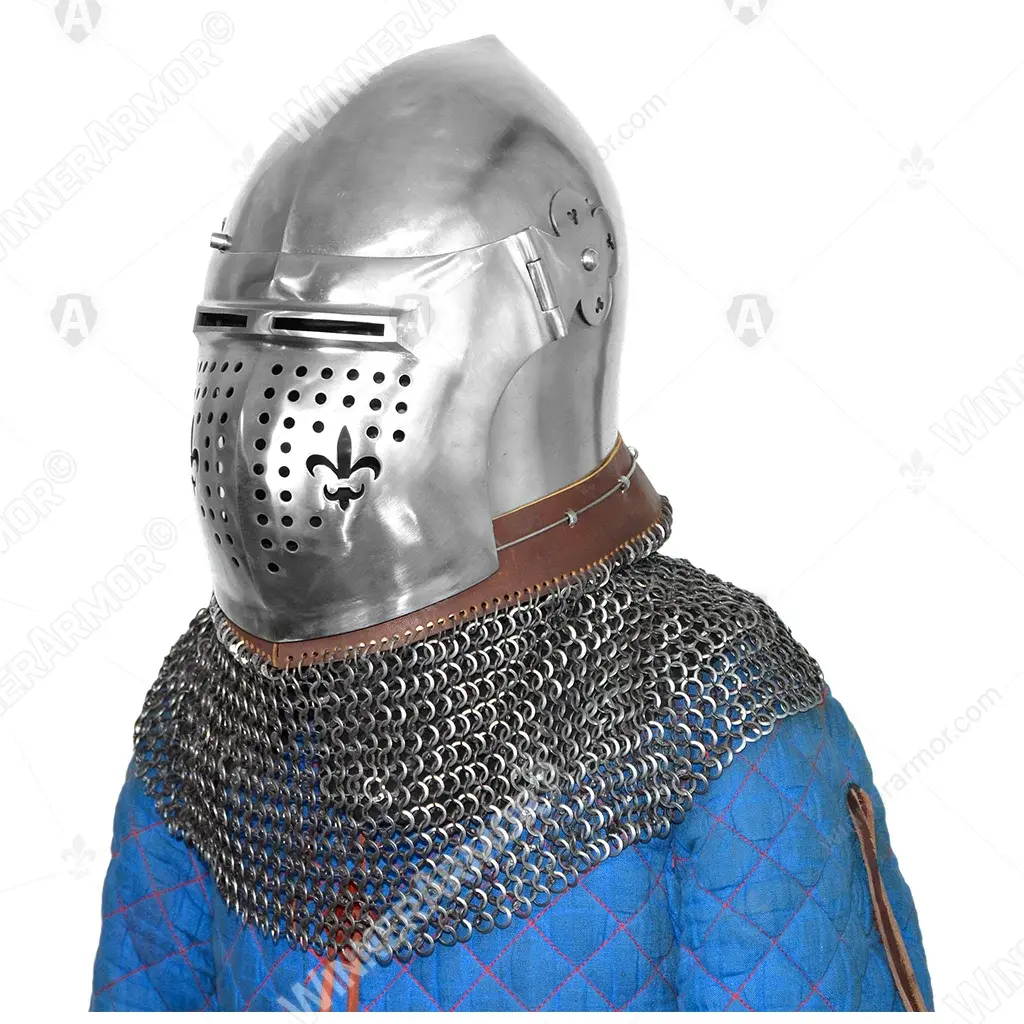
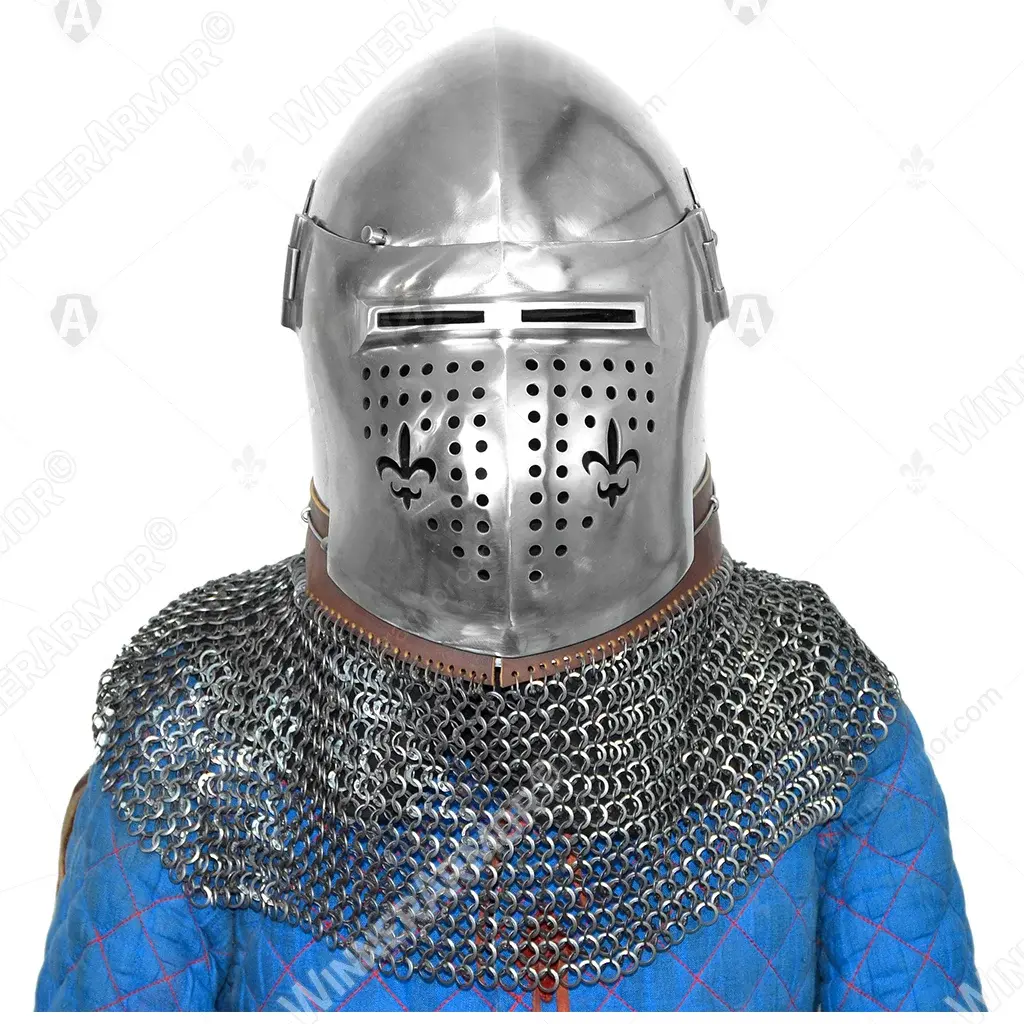
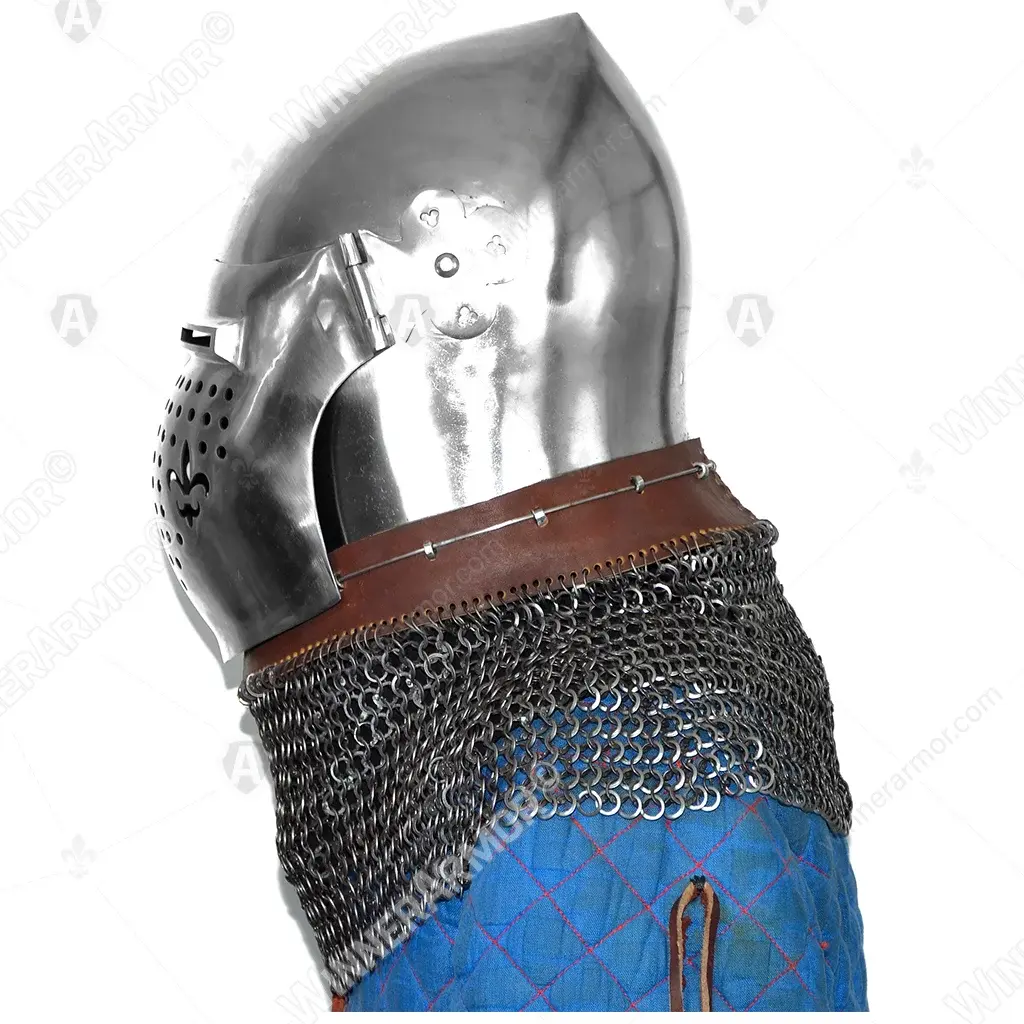
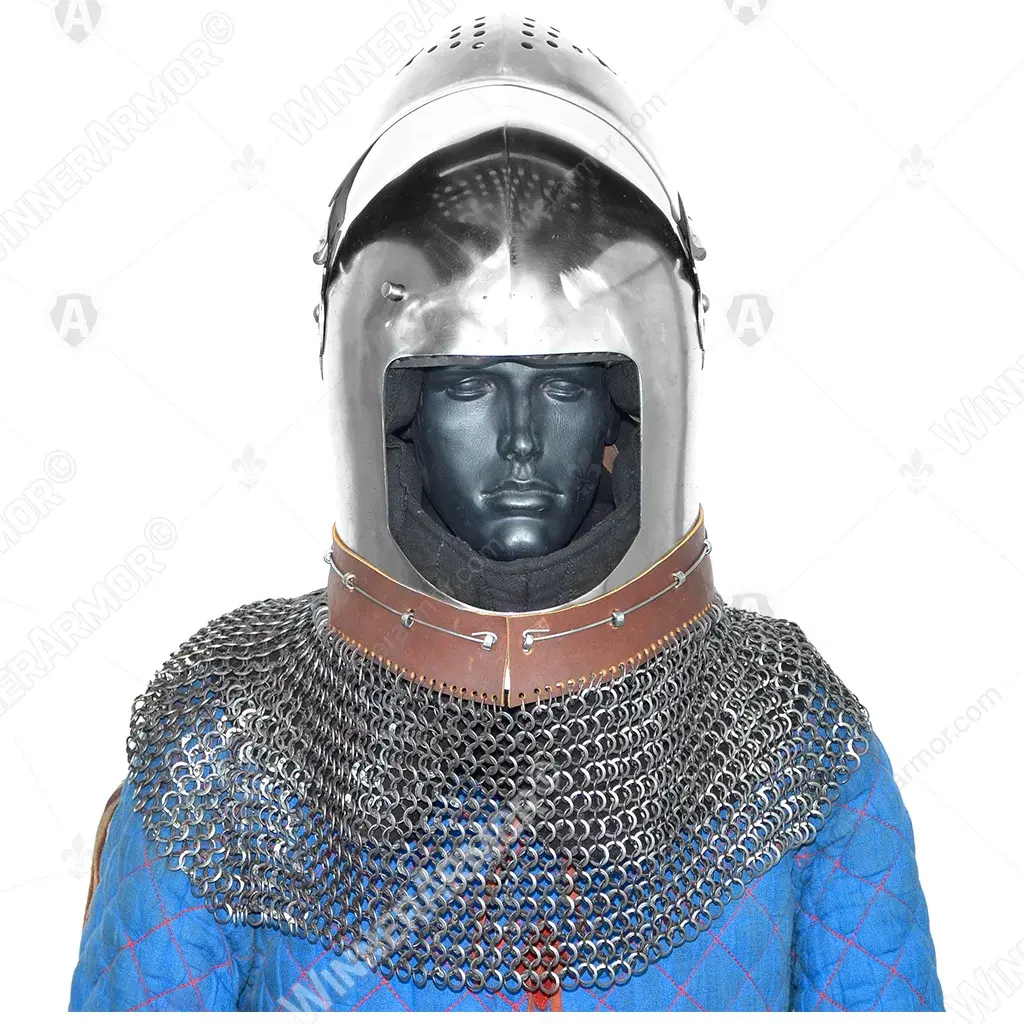
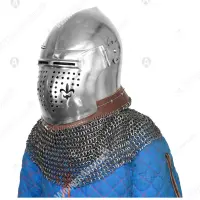

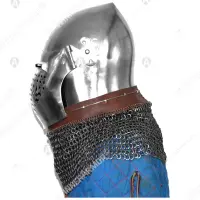



Split-visor bascinet — a European 14th-century helmet form, made with reference to historical analogs and sources rather than a “fantasy” shape. The split visor is less common than simpler layouts and takes more work to build, but it pays back in full-contact use: closure is more controlled, and the face section can be lifted during breaks to vent and recover without taking the helmet off.
For buhurt/full contact, the focus is protection, mobility, and practical maintenance. The dome and face plates are shaped to manage impact loads, while the eye-slit and perforation support usable vision and breathing. Fit is based on stable helmet geometry and standard sizing; the helmet is designed to work with a liner and padding system you choose for your ruleset.
- Secure visor fastening compared to basic designs: reduced play and consistent lock-up.
- Ventilation between rounds: lift the visor to dump heat and restore breathing.
- Service-friendly: access to hinges and hardware helps inspection, tightening, and post-training repairs.
- Build options: different steel/thickness variants are available (see the product page for exact parameters).
Regarding event checks: the construction is aimed at common safety expectations in full-contact formats (e.g., HMB, IMCF and others), but final acceptance always depends on a specific organizer’s rules and the condition of the gear at inspection.