
Nuremberg plate gauntlets for full-contact buhurt
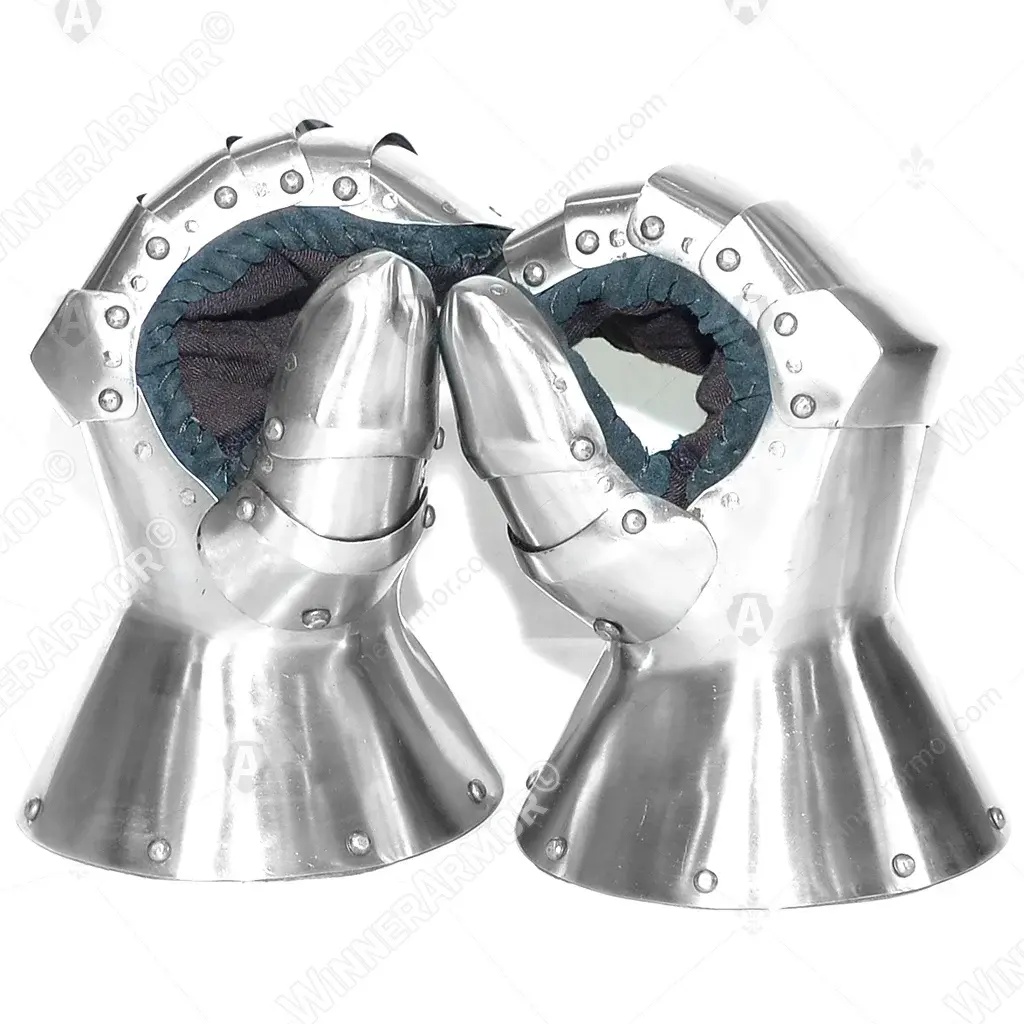
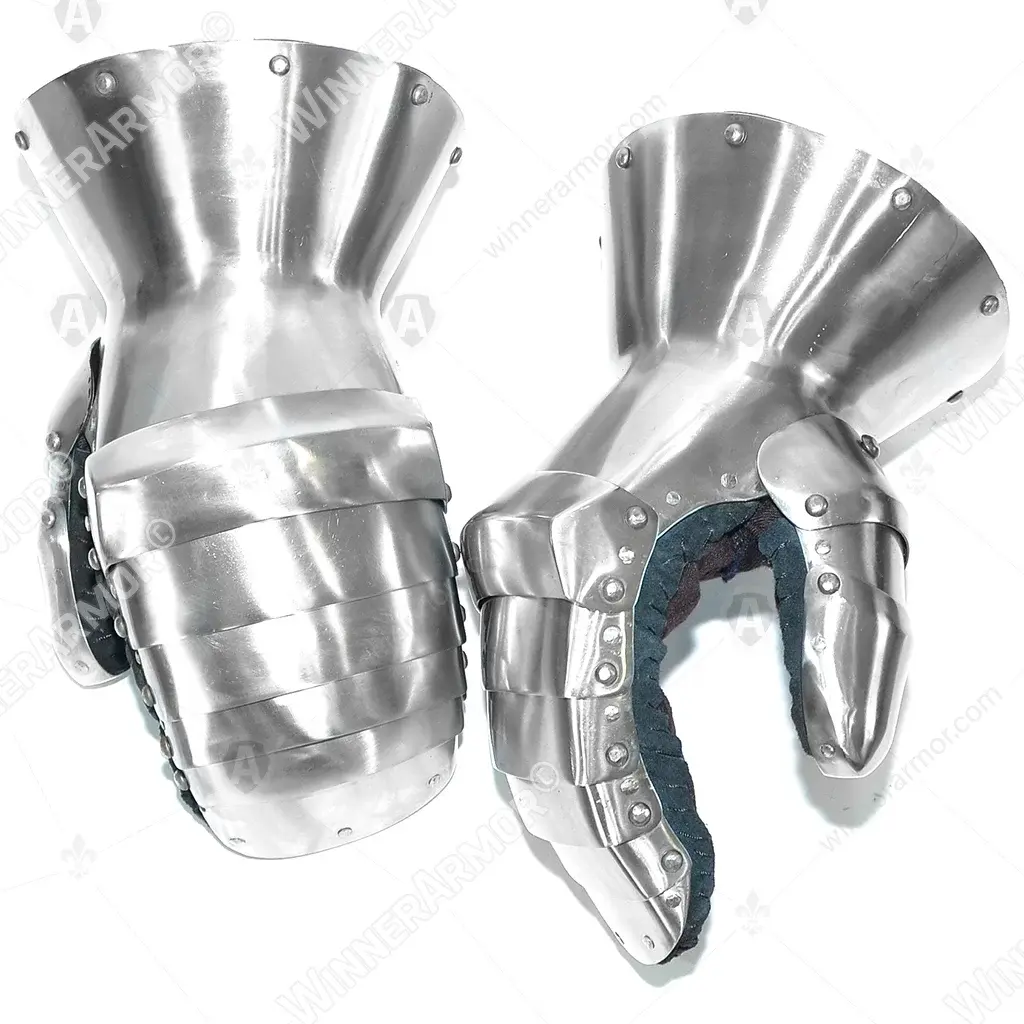
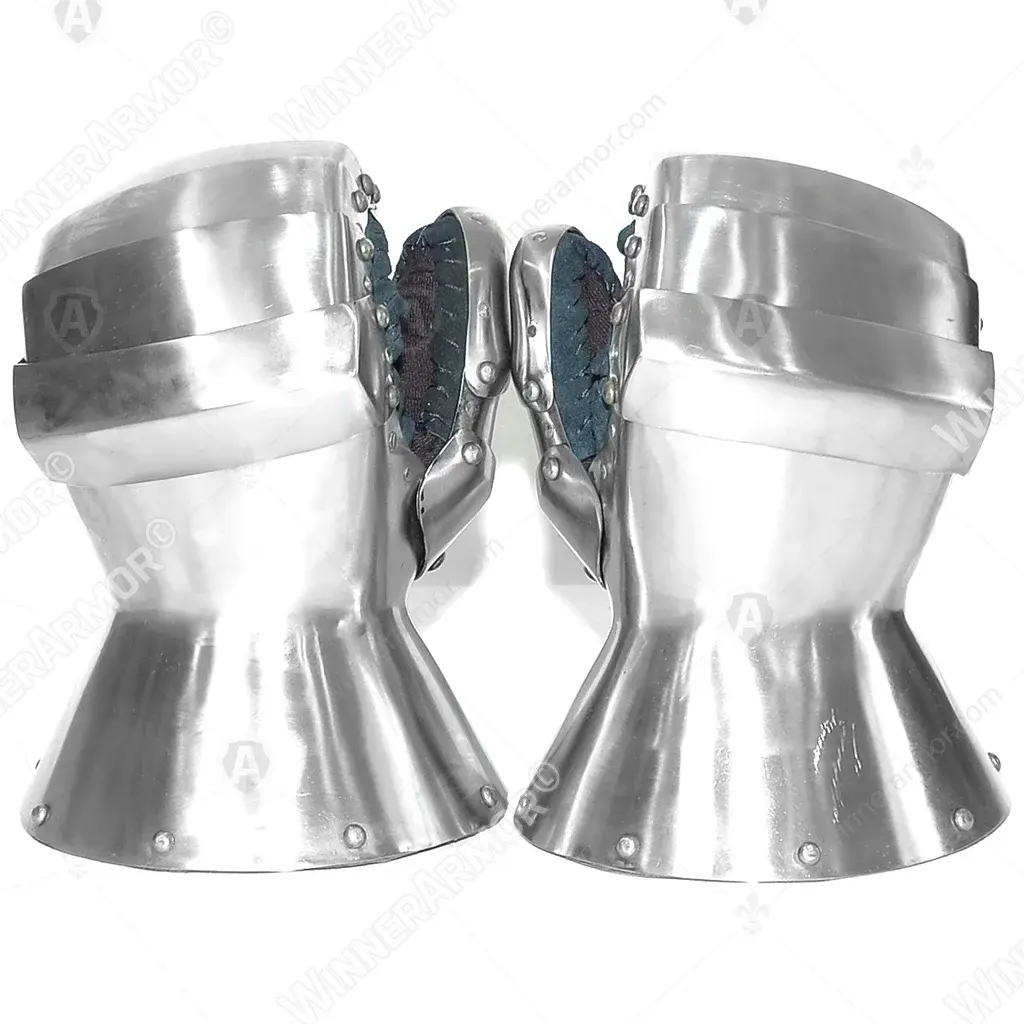
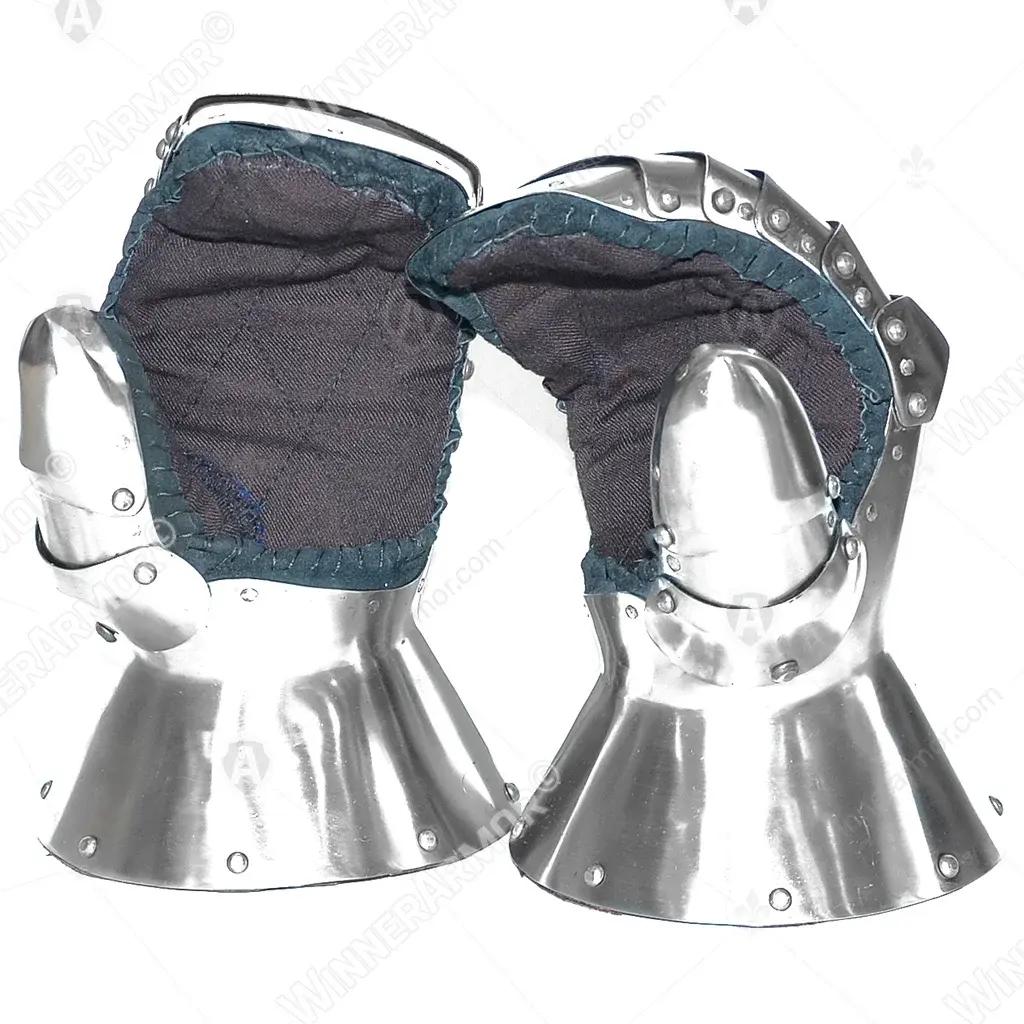
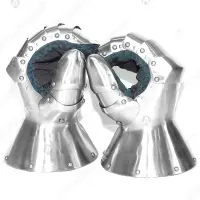
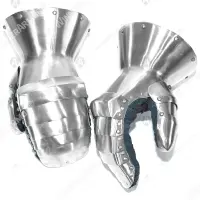
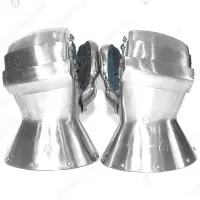
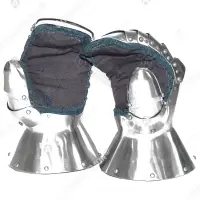


These plate gauntlets follow a Nuremberg-type prototype from the early 15th century. The design is based on a historical visual source (a Nuremberg statue), then adapted into a practical buhurt configuration for repeated full-contact use.
The buhurt update focuses on the finger-base area: one segment is modified to improve flex and control on the weapon handle. You get better grip work and clinch handling while keeping continuous coverage over the back of the hand.
- Hand protection: overlapping riveted plates spread impact and keep the knuckle zone covered during close exchanges.
- Articulated thumb: a separate enclosed thumb module helps reduce side hits and snagging.
- Flared cuff shields the wrist line and helps overlap with your vambrace/sleeve edge to reduce gaps.
- Sewn-in padded mittens are included in the price to add comfort, reduce rubbing, and provide internal damping.
Fit is built around typical hand proportions and sizing, intended to be worn over a glove layer and secured with standard arming methods used in sport armour. Regarding equipment checks: geometry is made with common full-contact rules in mind (e.g., IMCF, HMB, ACL and others), but acceptance is always decided by the specific tournament regulations and inspection.
Maintenance notes: dry the liner after training, inspect rivets and edges, and keep moving joints clean. Riveted construction is serviceable, so worn elements can be tightened or replaced as part of regular upkeep.