
Japanese kabuto with demon-style face mask
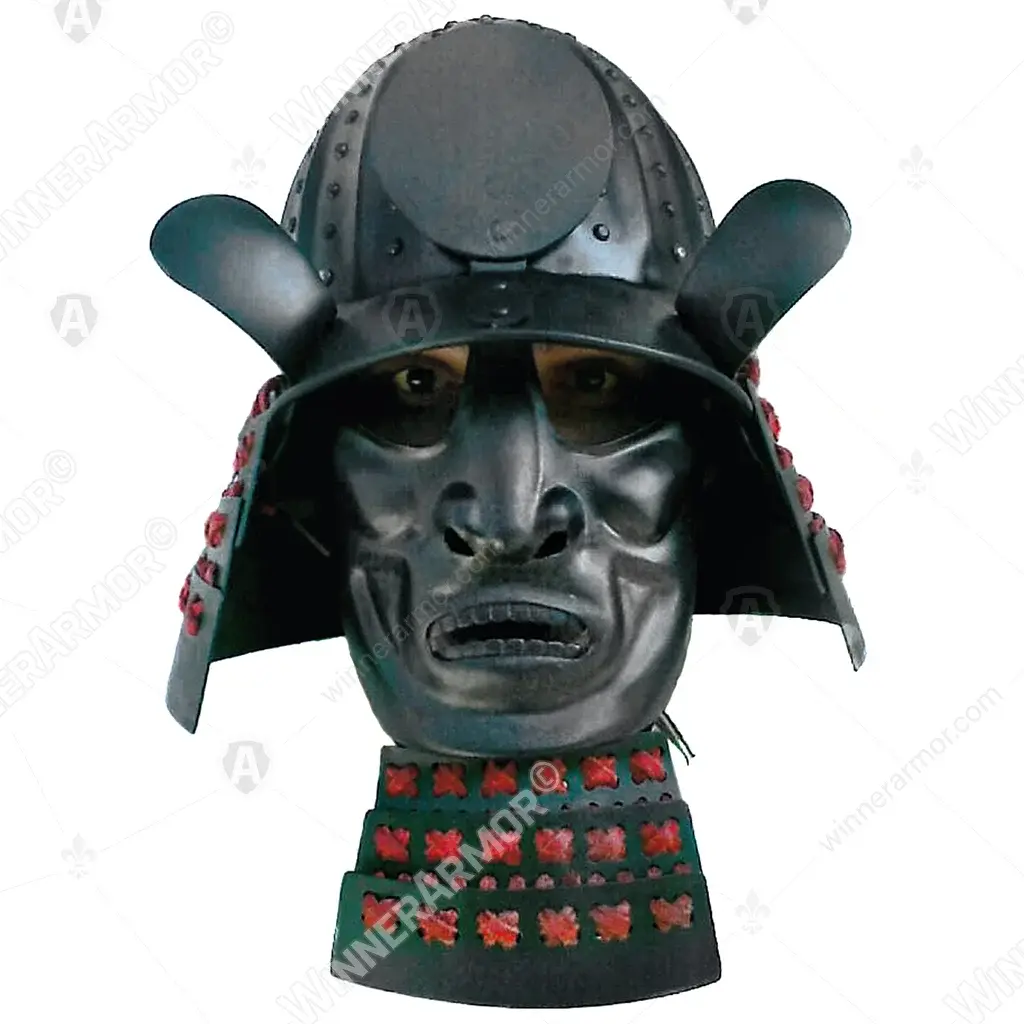
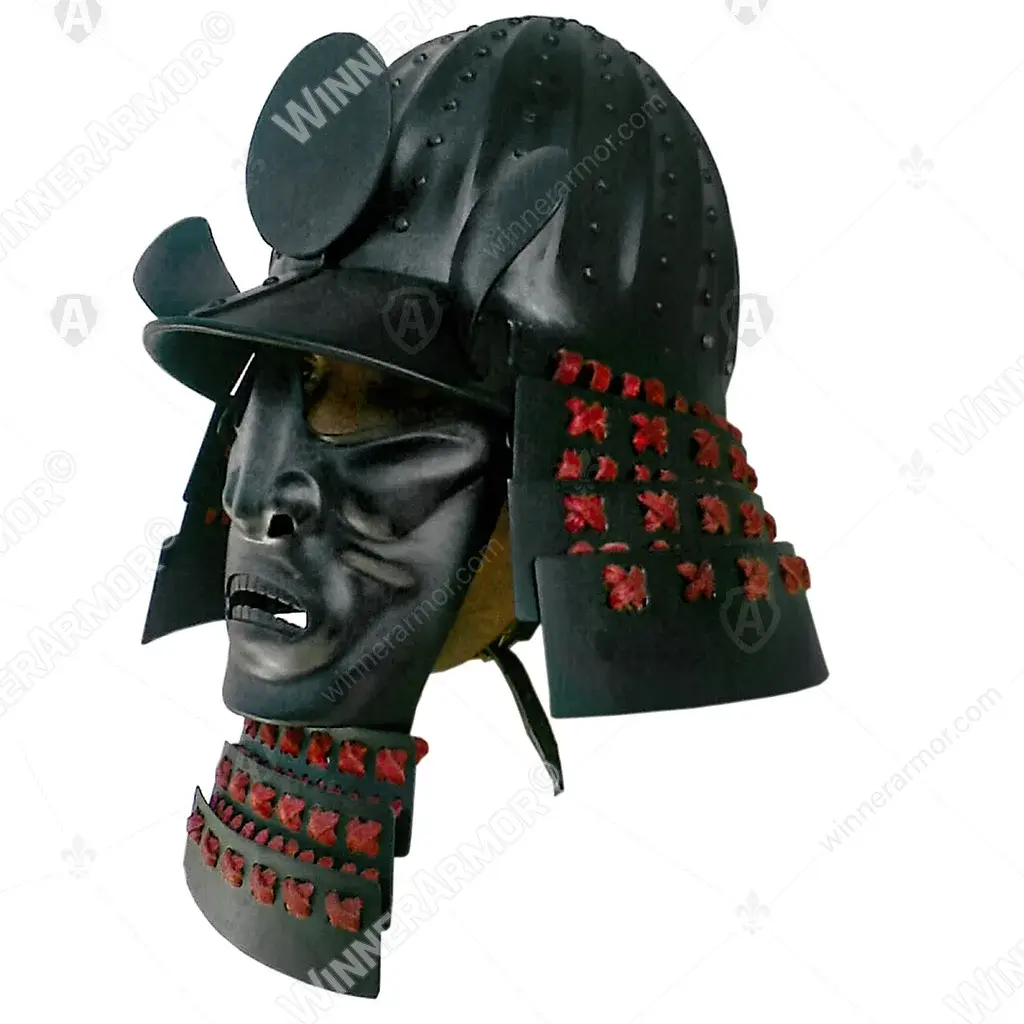
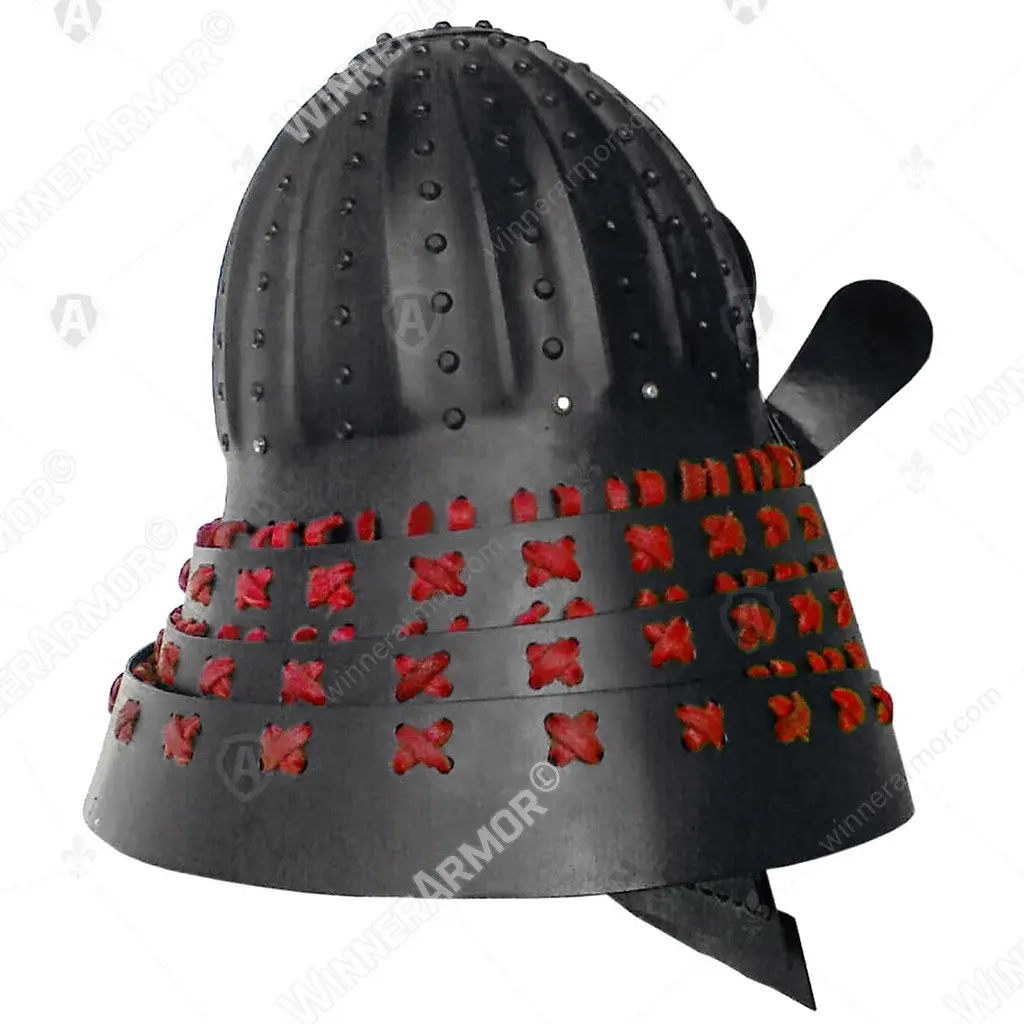
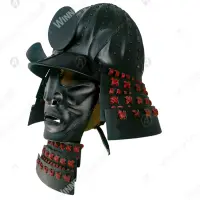
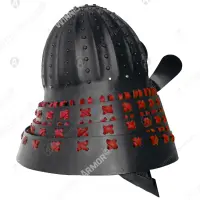


Japanese kabuto helmet with face mask is an eastern-style helmet for buhurt / full-contact armored combat, focused on face coverage and rear-head control during exchanges. The silhouette follows historical Japanese kabuto and menpō mask analogues referenced from museum pieces and iconography, with a practical layout for modern safe use.
- Protection: the fixed mask reinforces the front and reduces exposure of nose and cheekbones; the plated neck guard helps against glancing blows to the occiput and upper neck.
- Mobility: dome profile and neck “skirt” are suited for clinch pressure; when pairing with a gorget and shoulders, keep clearance so parts do not bind on turns.
- Visibility & comfort: a closed face means you manage fogging and airflow—set your padding, use anti-fog if needed, and test sight lines in stance and on entry.
- Fit: geometry allows space for a padded liner; strap fixation helps prevent rotation and keeps the sight line consistent.
- Serviceability: rivets and lacing make routine repair straightforward—straps and cords can be replaced as consumables.
Event rules differ by league and tournament. Before ordering, compare requirements for vision openings, protrusions, chin/neck coverage, material specs and padding with your ruleset (HMB, IMCF, etc.). The construction is aimed at typical safety checks, but final approval is always up to the event marshals.
Use a helmet liner of appropriate thickness, re-check strap tension before each fight, inspect rivets and lacing regularly, and dry the helmet after training; refresh protective coating as it wears.