
Proletarskoe Eastern Helmet with Aventail
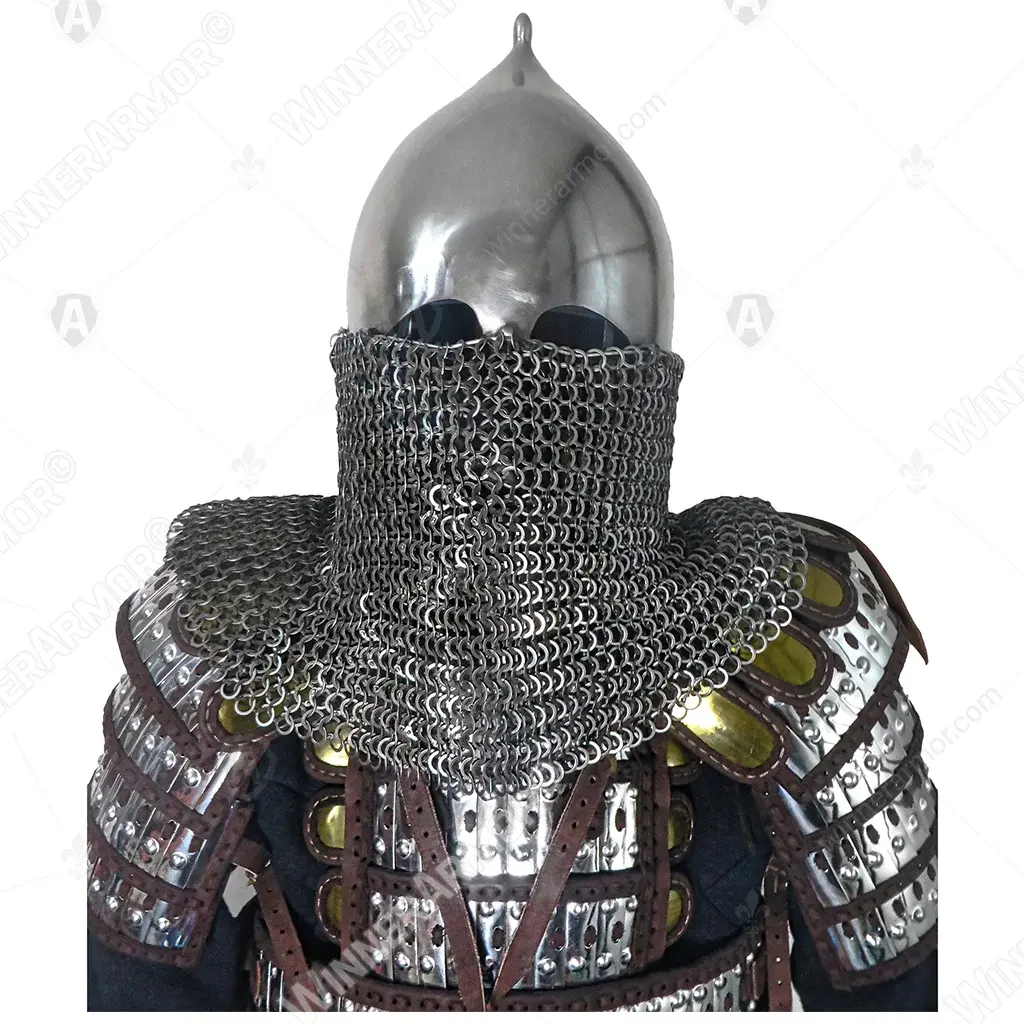
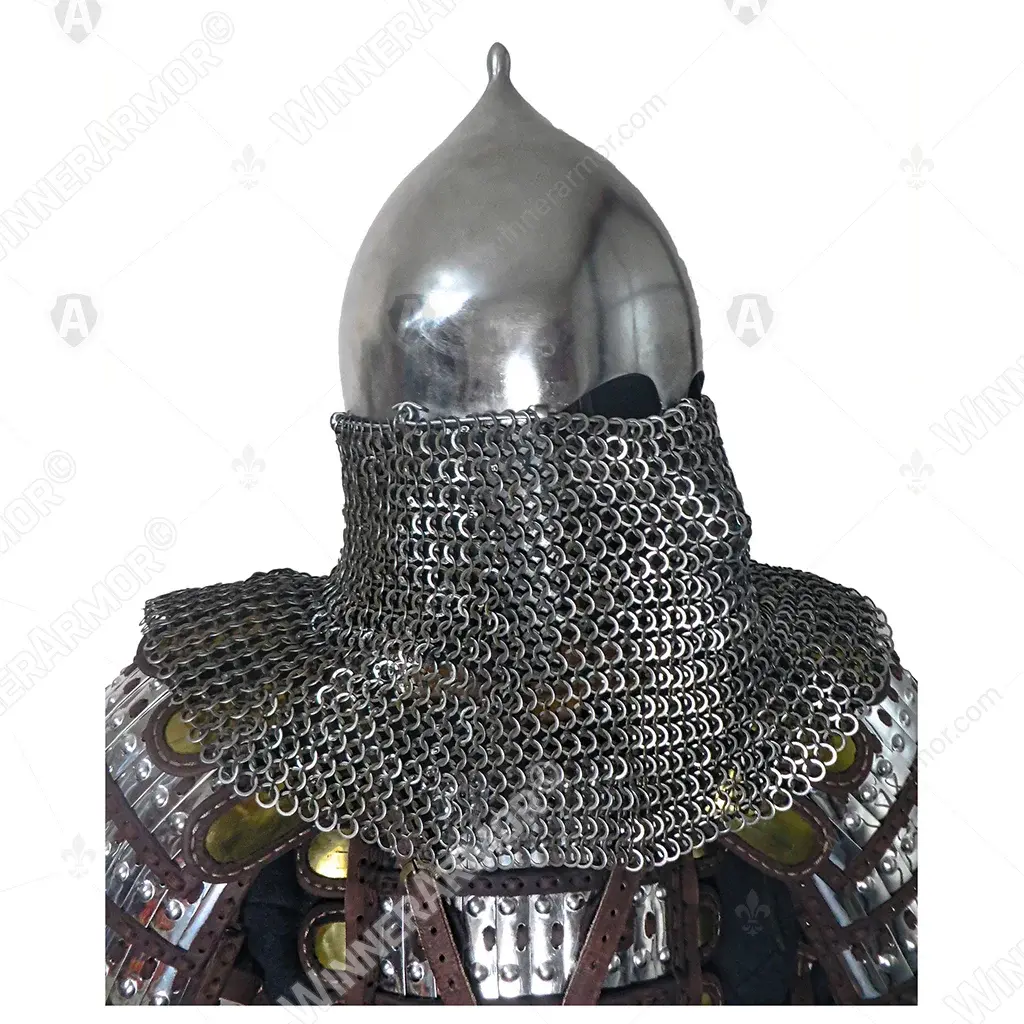


Eastern helmet Proletarskoe is a steel helmet for buhurt and other full-contact formats. The shape follows historical sources and period analogues of Kuban nomads from the Golden Horde era—an informed reference, without claiming absolute reconstruction.
Protection and service life. The dome geometry is aimed at repeated impacts and clinch pressure. The face section covers key zones and helps keep the helmet stable in grappling exchanges. The chainmail aventail protects the neck line and lower jaw area while spreading load toward the shoulders.
What’s included. The product listing states: chainmail aventail, a padded liner and straps. Material, thickness, and heat-treatment are selected in the options to balance weight, stiffness, and maintenance interval.
Fit and mobility. The dome and brow lines are designed around common head anatomy (shape, occipital profile, nasal bridge height). Final stability comes from padding, strap adjustment, and controlled internal play—reduce lift on impact and avoid rotation during turns.
Use and repairs. For sport, serviceability matters: the aventail is repairable by replacing rings/sections, straps and fasteners are replaceable, and padding can be renewed after a season. Inspect rivets, edges, and ring condition routinely.
About tournament checks. The helmet can be configured with common rulesets in mind (for example HMB, IMCF, and others), but the final decision is always made by event inspectors at control and depends on configuration and equipment condition.