
Chainmail mittens for full-contact combat
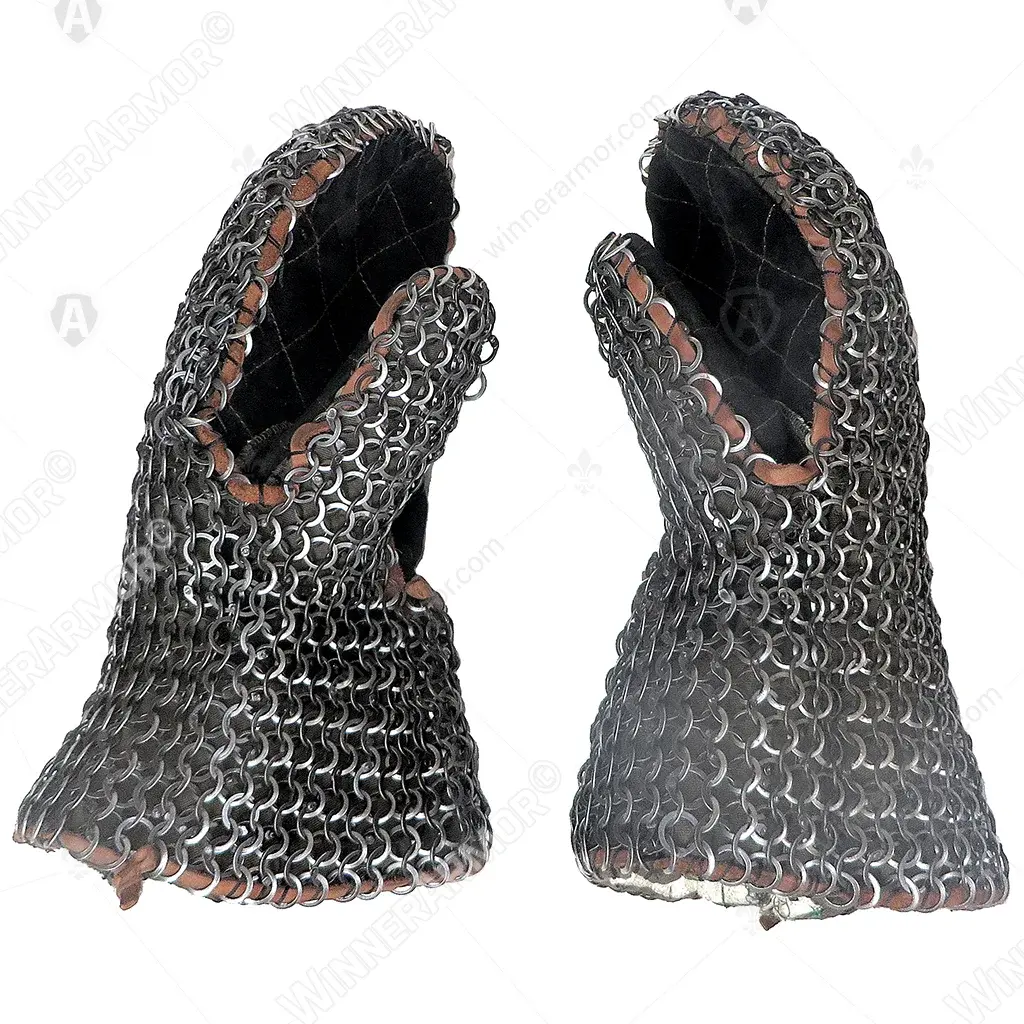
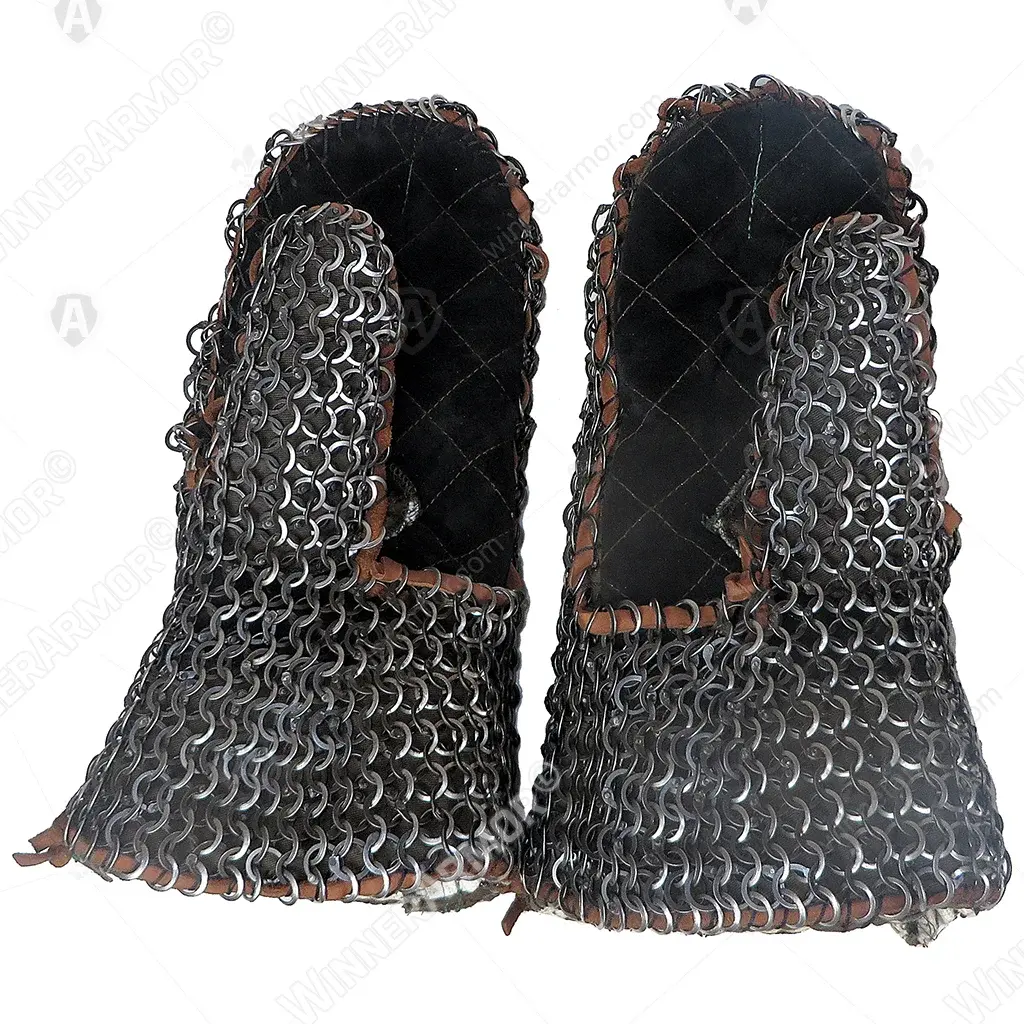
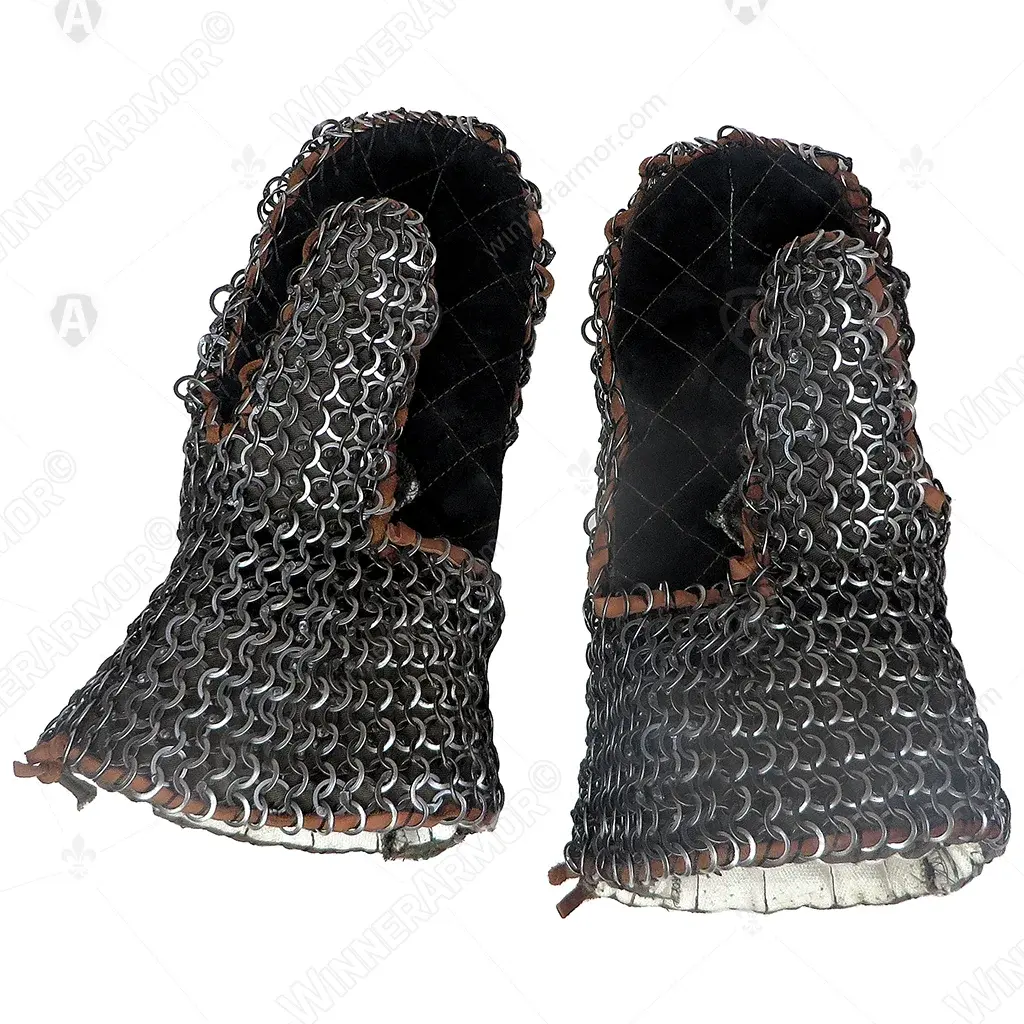
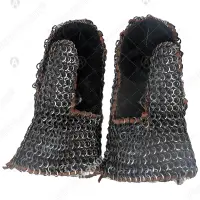
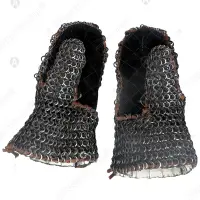


Chainmail mittens in mitten format are a practical hand protection choice for full-contact historical combat. The mail covers the back of the hand, thumb and wrist area, helping reduce abrasion from sliding impacts and hook-ups.
The build is centered around a quilted padded mitten: a mail fabric of riveted and solid rings is stitched to the padded base along the edge, while the mitten volume helps damp impact and spread load. The openings are finished with edging and stitching to slow wear around bends and the palm entry.
- Protection: mail works against scraping contact; quilting adds cushioning and lowers point pressure.
- Mobility: mitten shape keeps a workable wrist bend and thumb position for grip, without rigid plates that can limit motion.
- Fit: geometry follows typical hand anatomy; correct sizing and a firm cuff edge help keep the mitten stable on the wrist.
- Service life: damaged rings or stitch areas can be repaired locally without rebuilding the whole mitten.
Manufacturing is guided by historical sources and early medieval Eastern and European analogues, where mail mittens appear as a common hand defense solution.
For events and sparring, follow the requirements of your ruleset: inspections typically focus on coverage of vulnerable zones and overall kit integration, and the final decision is made by officials.
Care: dry after use, remove dirt, periodically check rings and stitch lines; avoid long exposure to moisture and sweat/salt during storage.