
Eastern bazubands: forearm armor for full contact
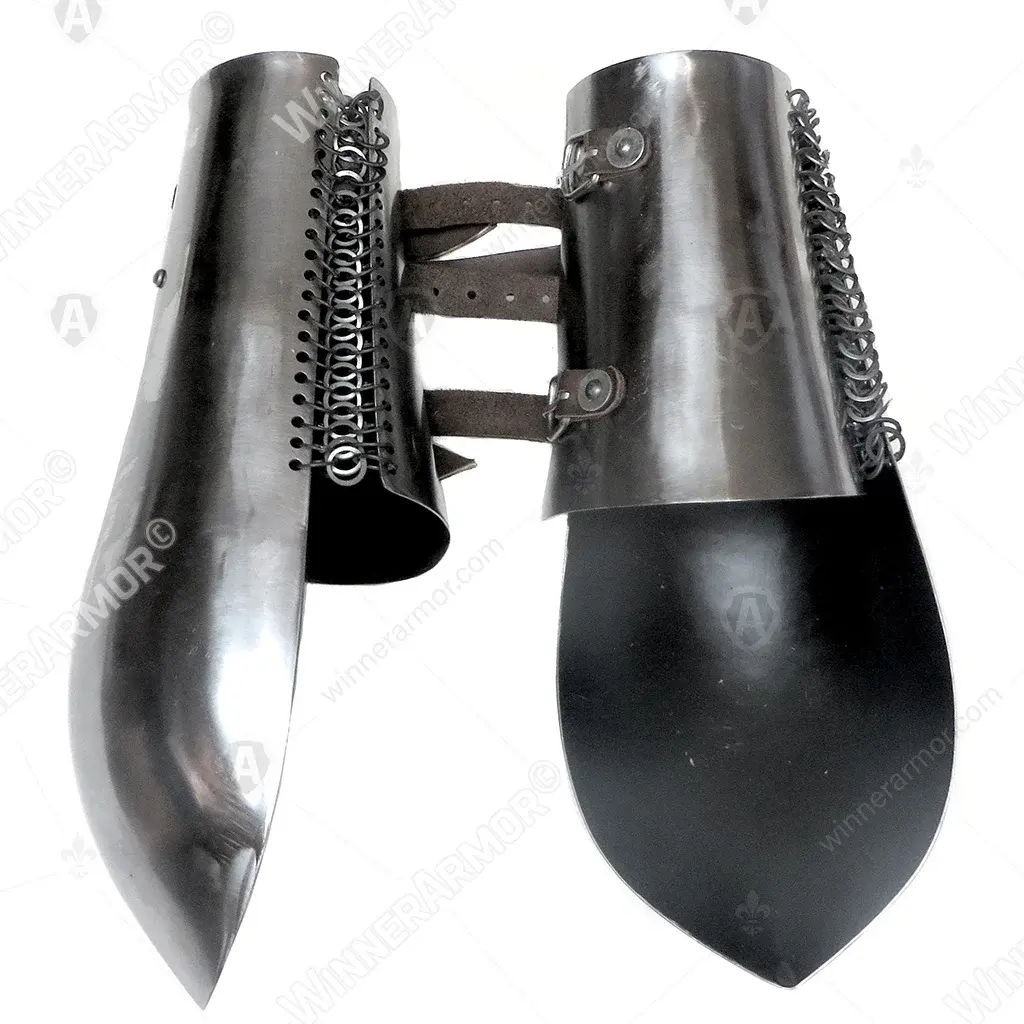
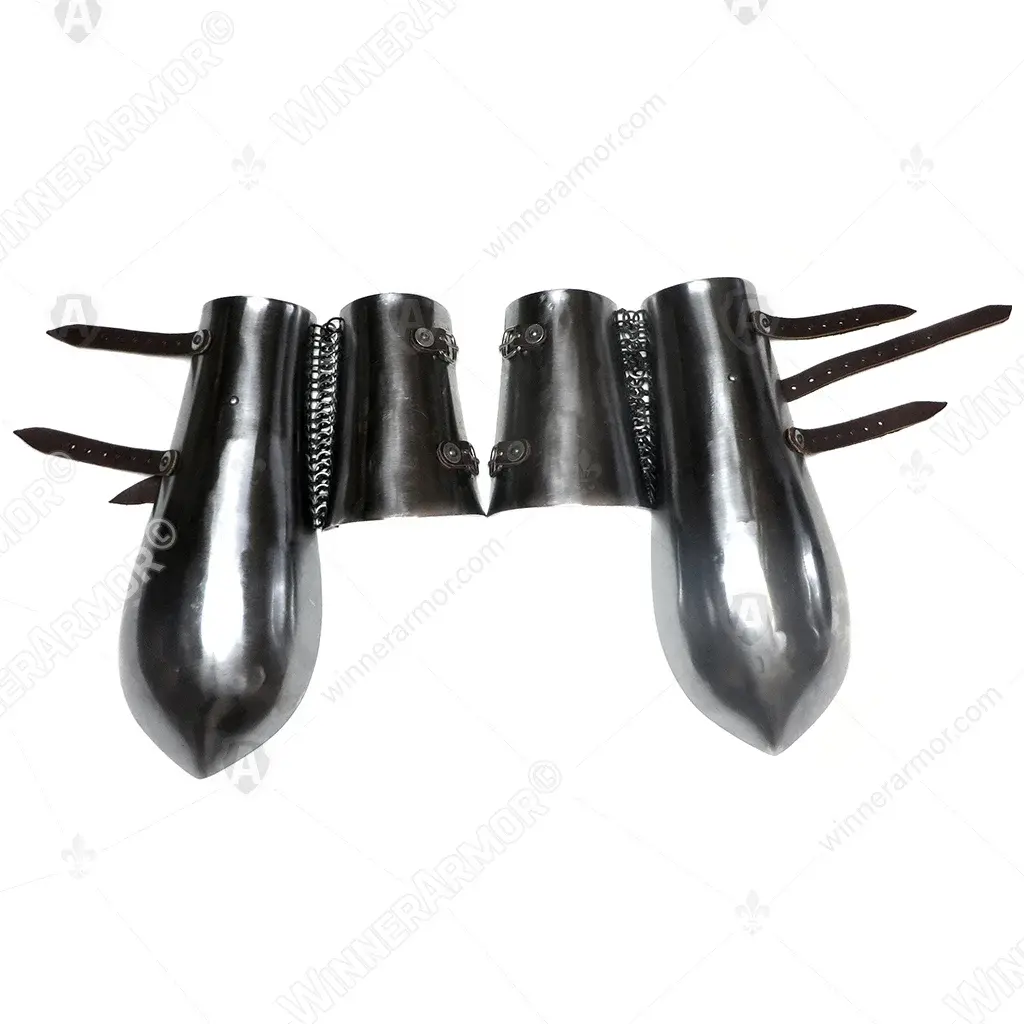
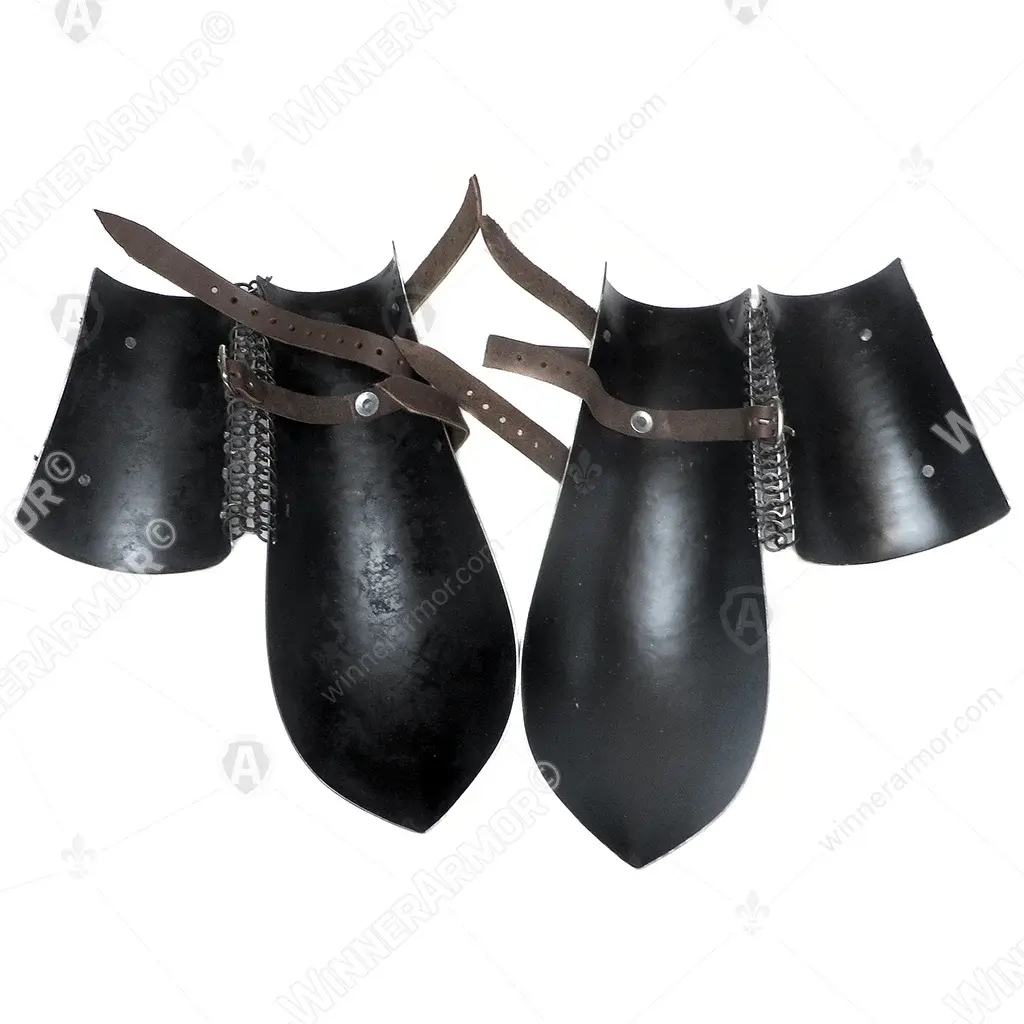
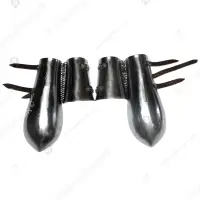
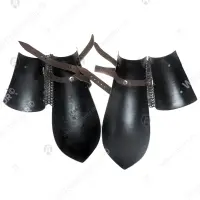


Eastern bazubands are a classic type of forearm protection used across medieval Eastern armour traditions. The design follows historical analogs and visual sources: two main plates are tightened with straps, while the edge seam is connected with rings — a period-typical solution that combines rigidity with controlled articulation.
The geometry is shaped for the forearm: impact zones along the outer line of the arm are covered by continuous metal, while the construction keeps room for bending and gripping. The lower edge is intended to overlap with a gauntlet or glove cuff to reduce a wrist gap during striking, clinch work and weapon retention.
- Protection: solid metal coverage on key lines, closed edges and a ring-linked side seam.
- Mobility: split sections and flexible lacing help movement without harsh binding.
- Fit: buckle straps provide an adjustment range over a gambeson and elbow padding.
- Serviceability: straps, buckles and rings are replaceable parts for field repairs.
For tournament inspections, correct assembly matters: pick the right size, wear appropriate padding and ensure the wrist/gauntlet junction is closed. The construction generally aligns with common safety logic used in buhurt rule sets (e.g., HMB/IMCF/ACL), but final approval depends on the specific event regulations and the full equipment setup.
Care: dry after training, wipe and renew corrosion protection, and periodically check strap holes and the ring seam for stretch or play.