
Punch pavise shield for full-contact armored fighting
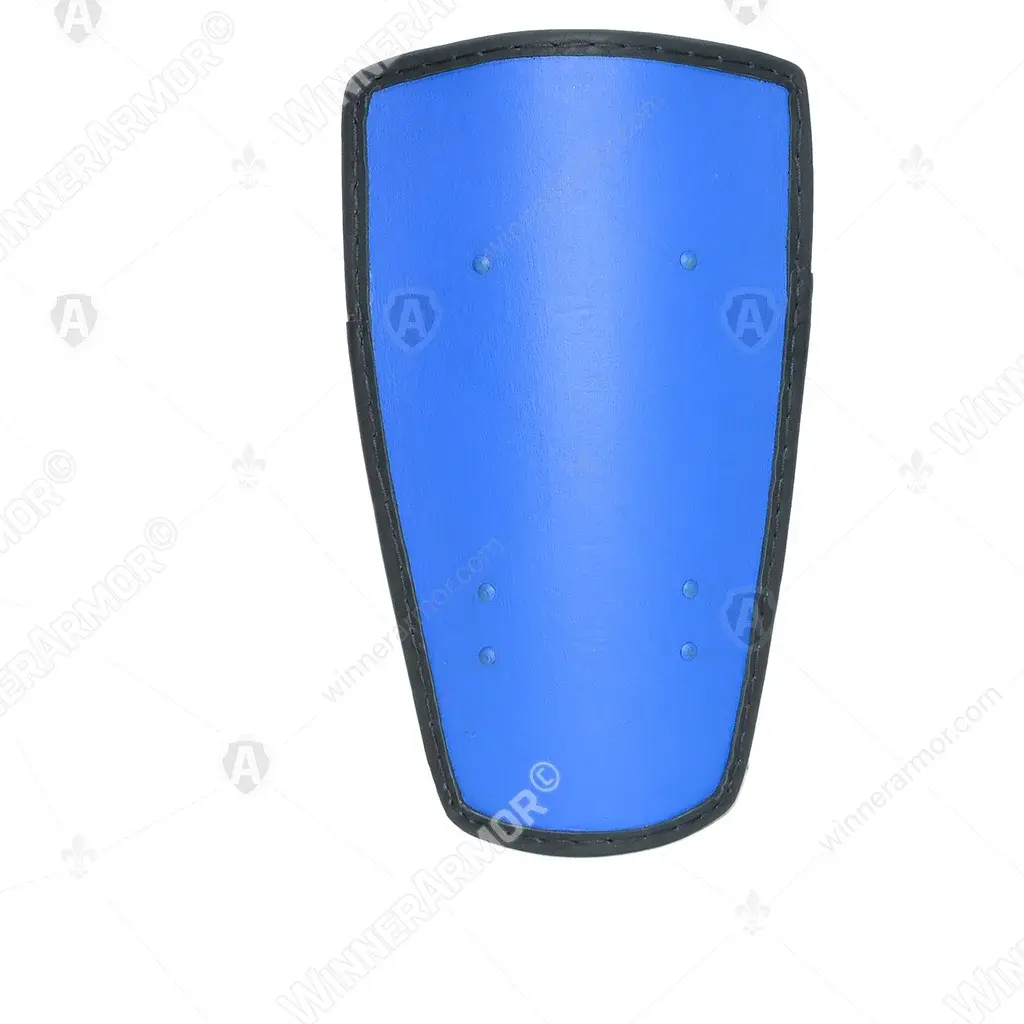
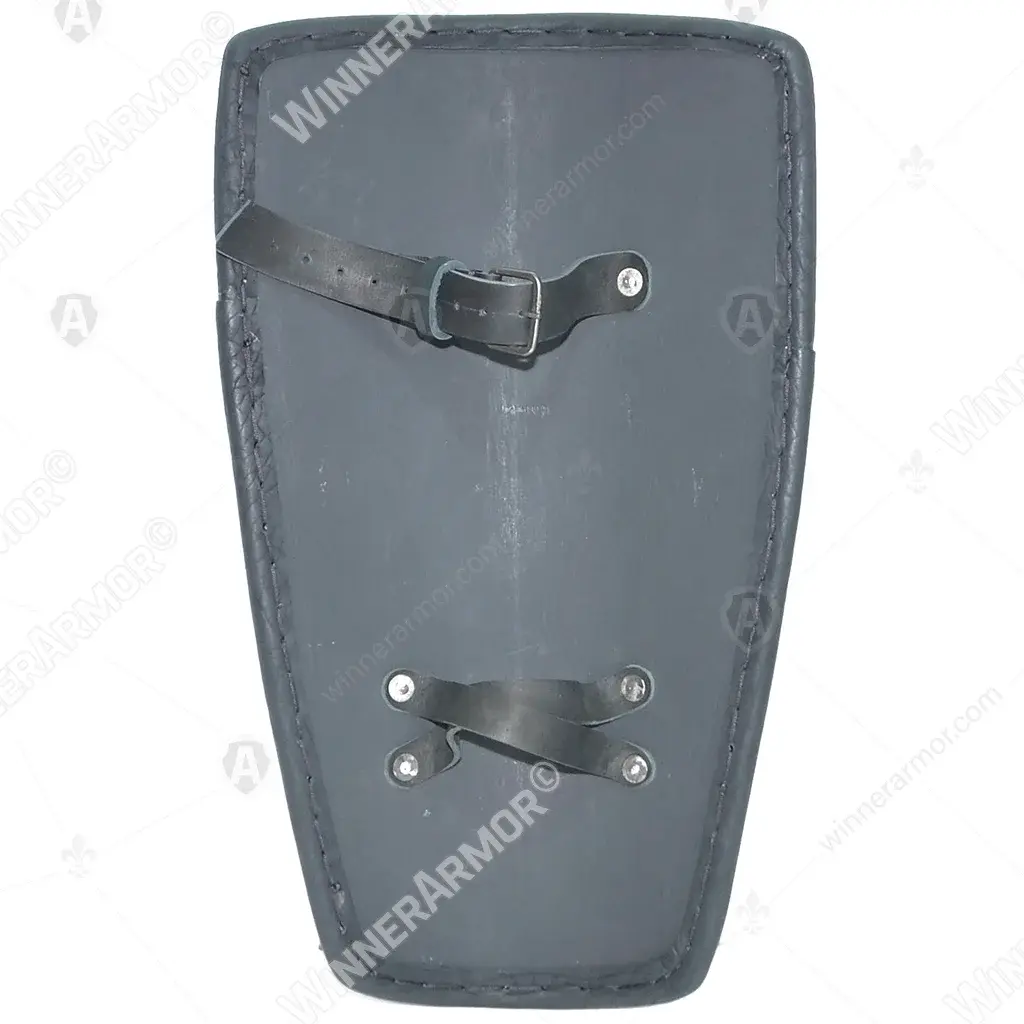
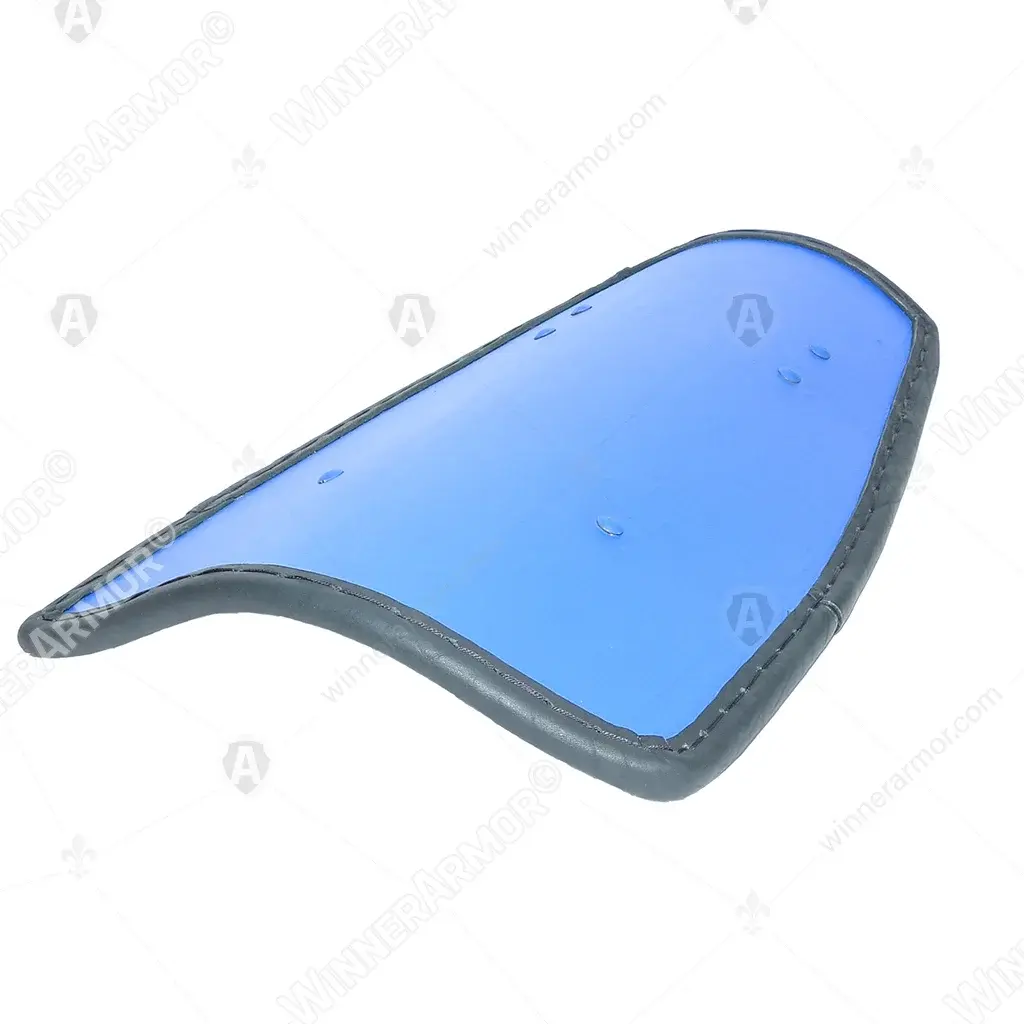
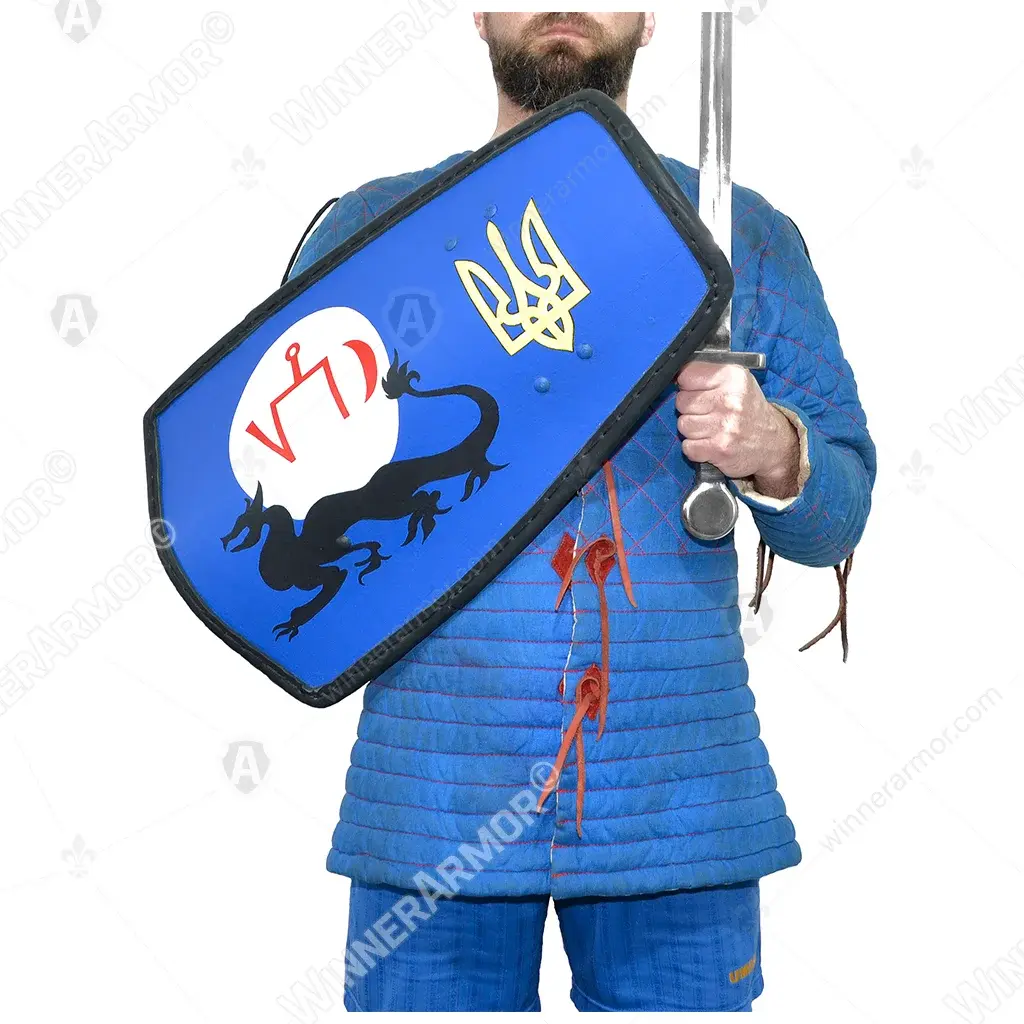
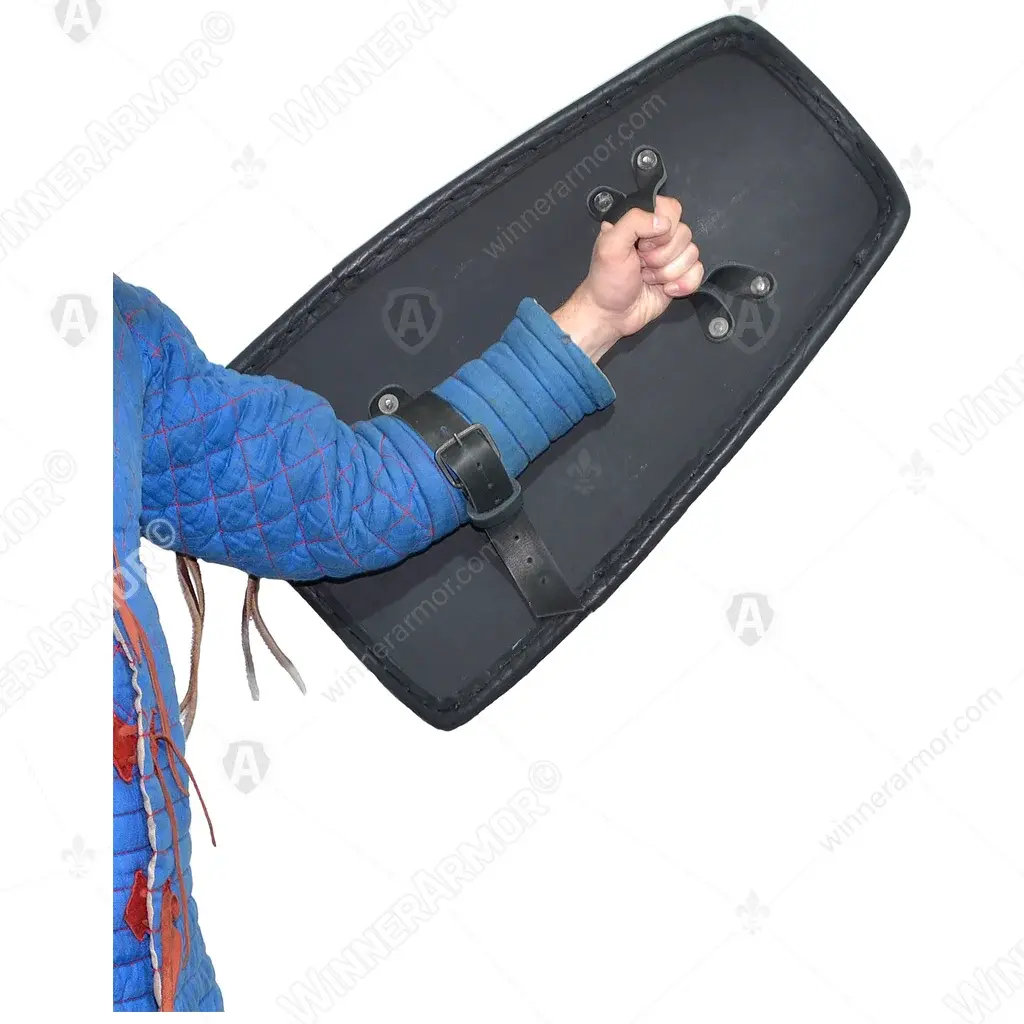
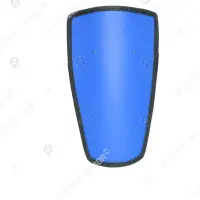
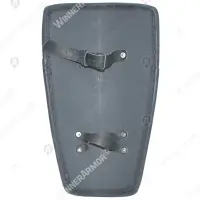
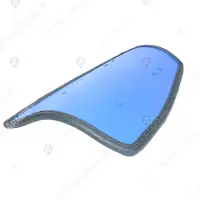
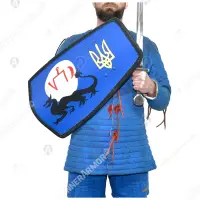
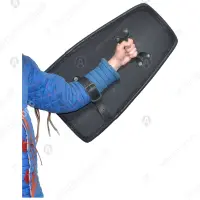


Punch pavise is a full-contact shield built for tempo control, clinch pressure, and reliable torso coverage. The outline is guided by historical pavise-type prototypes and sources, while the build approach targets modern impact loads from training and tournaments.
The key feature is the central groove grip: the forearm and hand sit in a defined channel, reducing unwanted rotation and “wobble” when you drive the shield into contact, catch blows, or clear the opponent’s weapon line.
- Protection: torso-oriented coverage with a shape that helps shed glancing hits and manage direct impacts in the plane.
- Mobility: punch format supports fast lateral transfers, quick re-centering, and efficient work in tight exchanges.
- Durability: covered rim and facing reduce wear from frequent hits and edge-to-edge contact.
- Fit: grip/strap and padding adjustments help match gauntlets and forearm gear without implying automatic bespoke measuring.
- Serviceability: consumables (rim cover, facing, hardware) can be maintained and replaced after hard use.
For tournament inspections, shields are commonly checked for secure fasteners, no sharp protrusions, intact edge covering, and adequate rigidity. Final acceptance depends on the specific ruleset and the inspector’s decision, as well as the condition of the shield at check-in.