
Knightly plate gorget for full-contact fighting
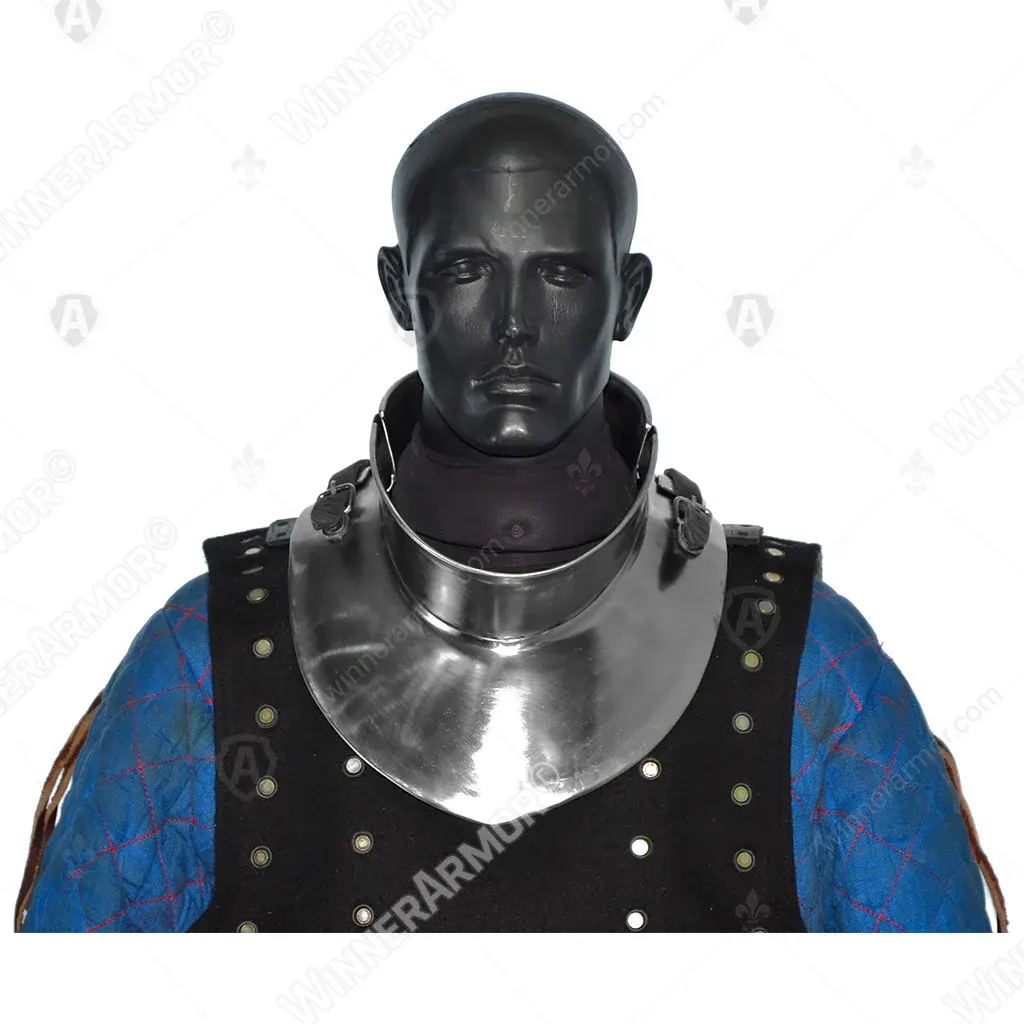
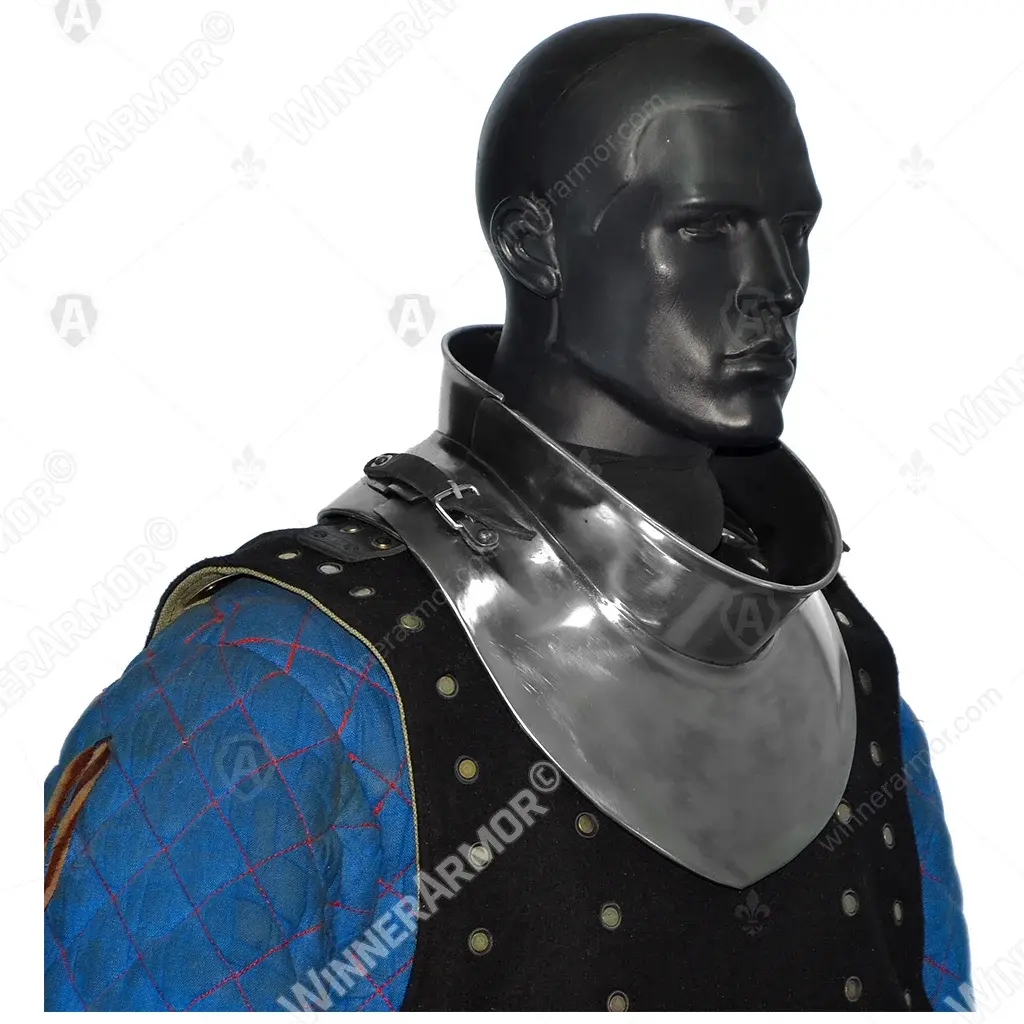
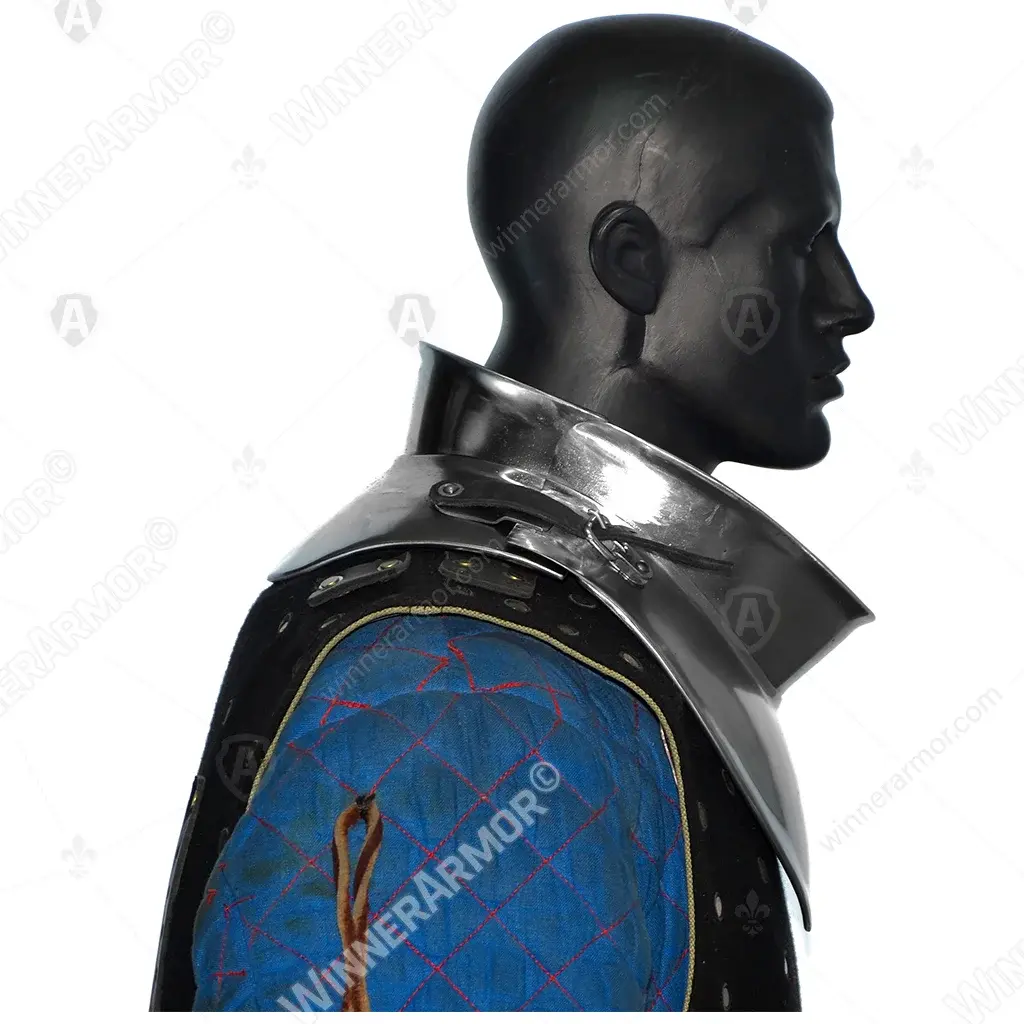
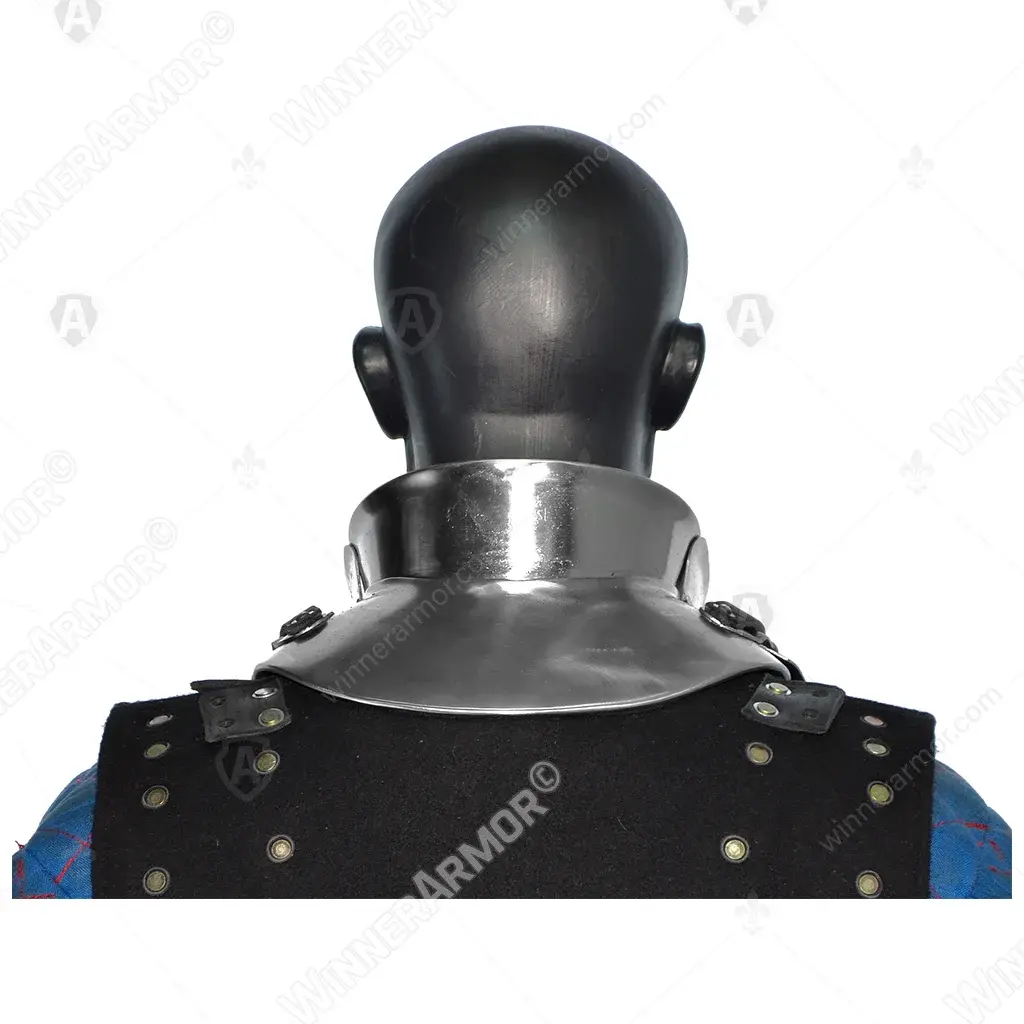
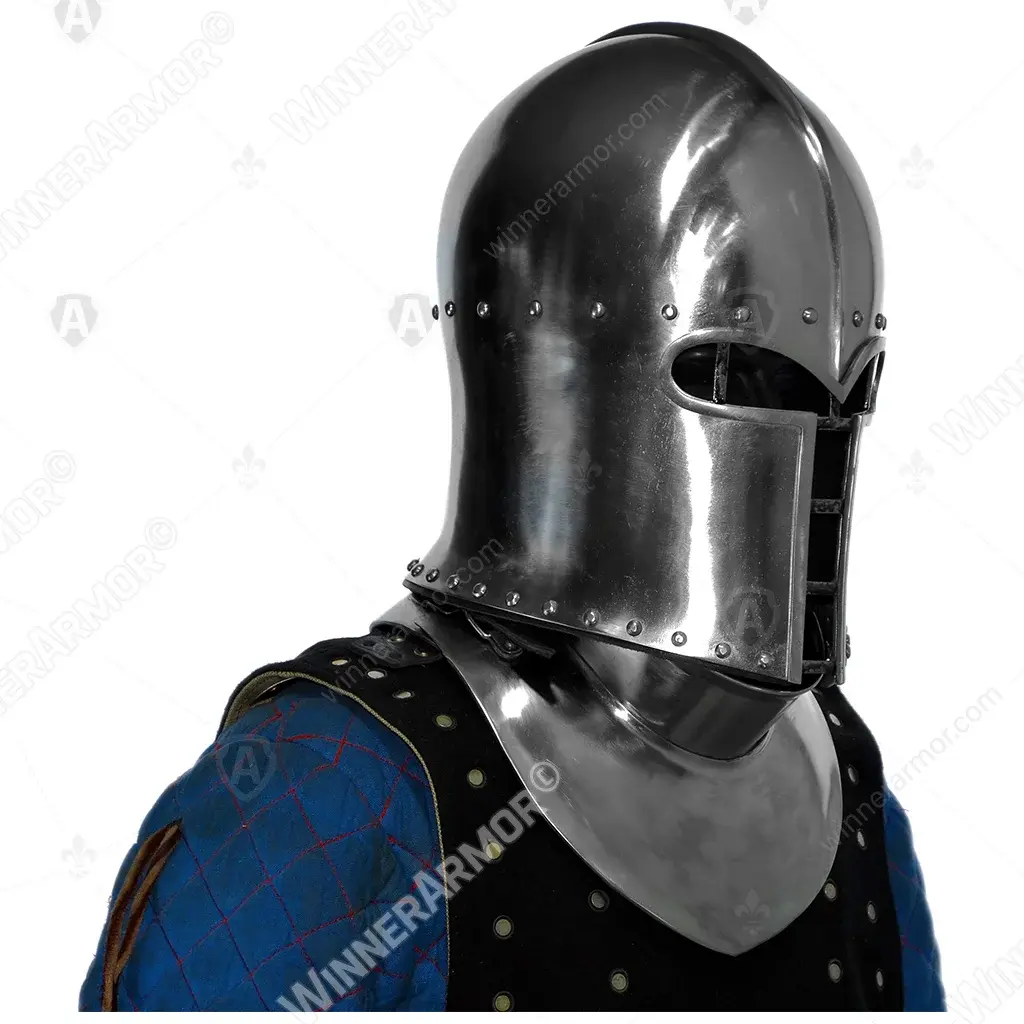







This plate gorget is built for full-contact medieval fighting, protecting the transition zone between helmet and torso. The construction is rigid and has no moving parts, which helps durability and keeps maintenance straightforward after repeated impacts.
The shape covers the neck, collarbones, and upper back, spreading force across a wider area under cutting and thrusting hits. A low rim profile is intended to work with barbute-like helmet designs, helping to avoid chin pressure during head movement and reducing interference in close-range grappling.
Fit is handled via strap adjustment, allowing you to set circumference and position with your padding thickness in mind. The geometry is based on practical anatomy of the neck/shoulder line to keep usable head rotation and avoid locking the traps during clinch and shield pressure.
The design is oriented on historical sources and comparable period neck/throat protection solutions, adapted to modern full-contact loads. For tournament use, follow your organizer’s inspection criteria: approval depends on overall kit integration, safe edges, correct fit, and helmet/torso compatibility rather than the gorget alone.
Use & care: dry after training, check straps and hardware regularly, and replace worn leather parts as needed. The rigid, no-joint build makes field repairs and strap replacement manageable.