
Chainmail skirt for hip and upper-thigh coverage
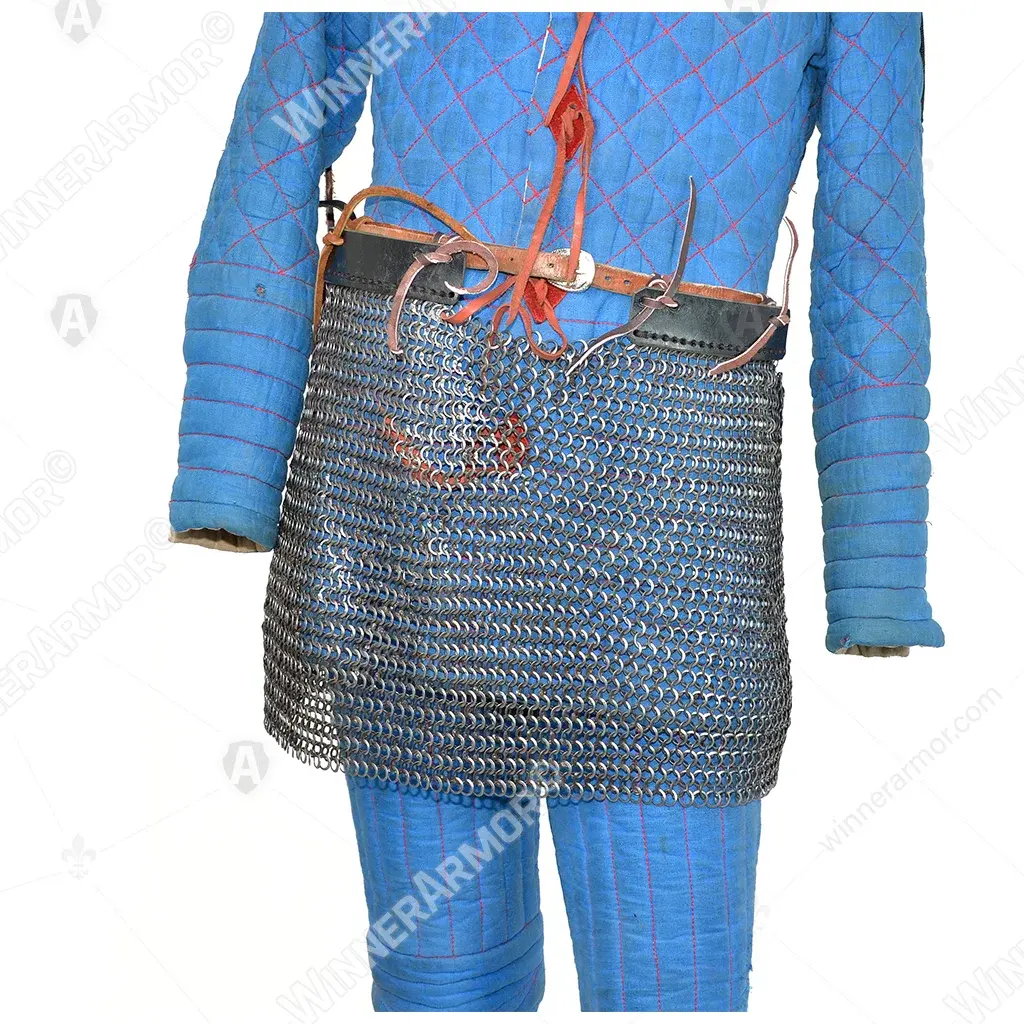
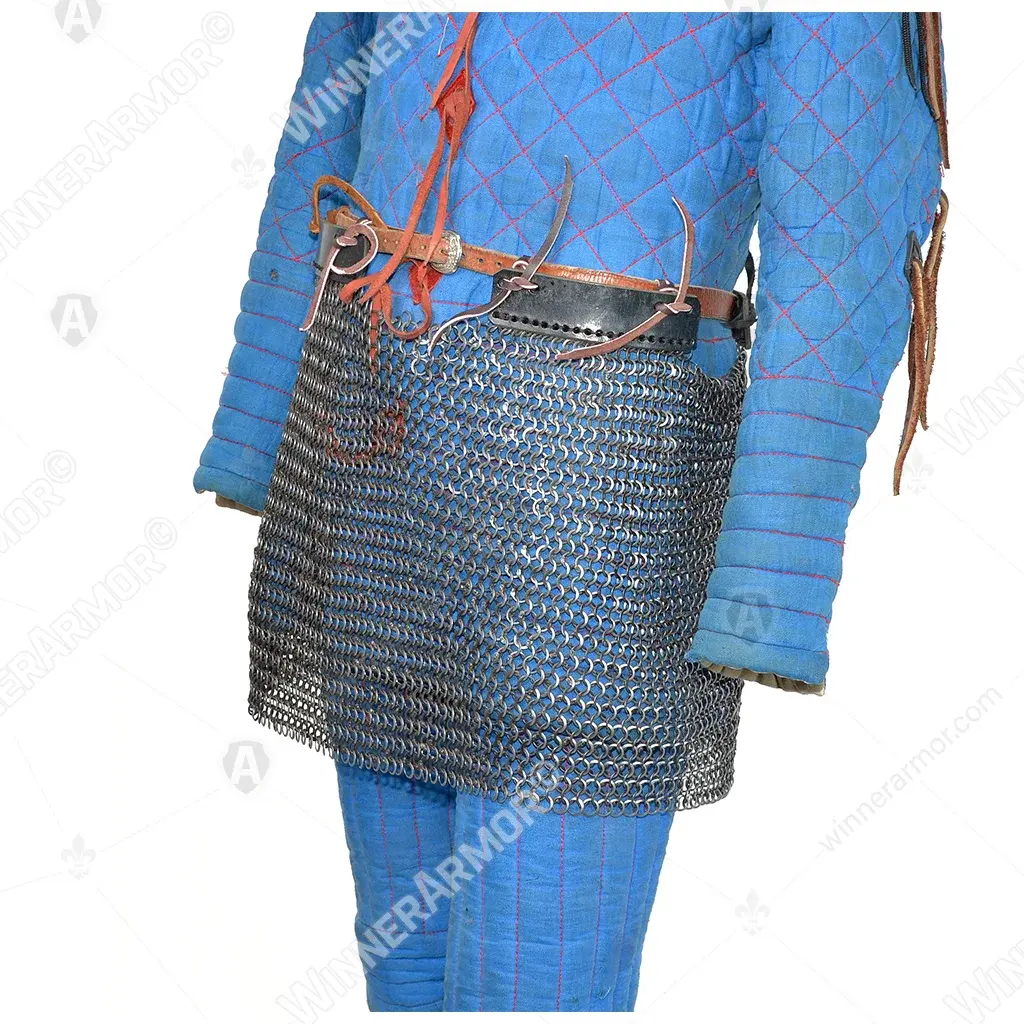
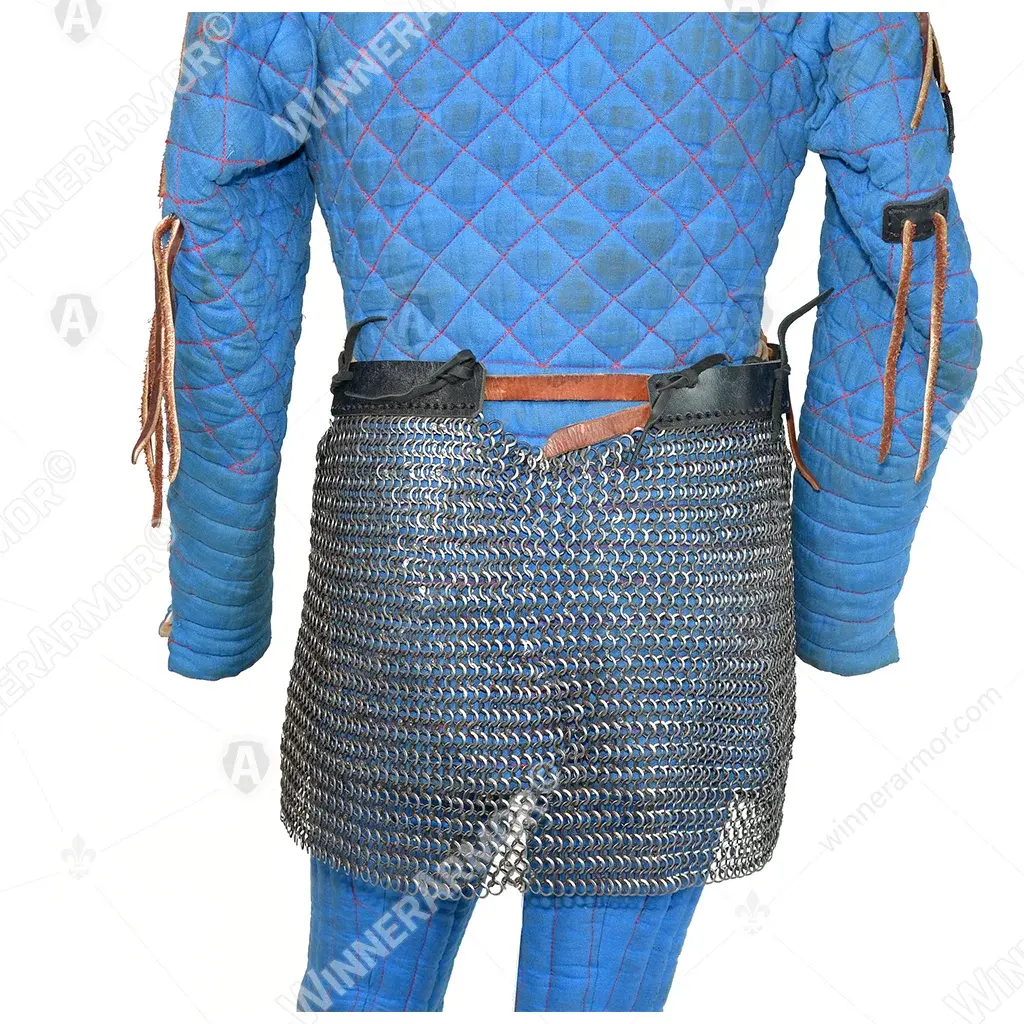
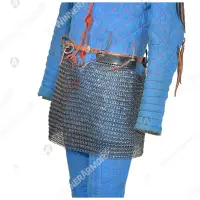
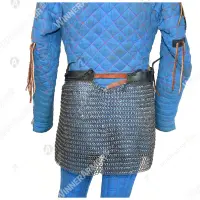


Chainmail skirt is a functional add-on that helps close a common weak zone between torso protection and the upper leg. Late European armor often moved away from full mail shirts toward separate mail components to reduce overall weight while still protecting vulnerable areas. This piece follows historical references and period analogues as a waist-level mail element intended to work alongside a cuirass.
In full contact formats, the goal is extra coverage for hips and the top of the thigh without rigid plate edges that restrict stride, lunges, or tight clinch work. A mail skirt stays flexible and helps overlap moving armor lines, especially during bends, turns, and body rotations when the torso armor can ride up.
Use cases: most commonly paired with a cuirass to protect the hip/upper-thigh transition. It can also be used with a brigandine when flexible lower-torso coverage is needed.
Service and maintenance: mail is field-friendly—damaged areas can be rebuilt section by section, restoring integrity without complex plate work. This is practical for regular training and buhurt use. For event checks, focus on secure attachments, correct length, and the absence of sharp points or burrs; these aspects are typically reviewed during equipment inspections across different leagues and formats (HMB, Buhurt International, etc.) without claiming guaranteed approval.